NIHB Mental Health Coverage: Therapy, Counselling, Claims & Provider Guide

Navigating Non-Insured Health Benefits (NIHB) mental health coverage can feel overwhelming at first, especially when trying to understand NIHB mental health counselling eligibility, approved providers, annual session limits, direct billing, and reimbursement procedures.
For eligible First Nations and Inuit clients, the NIHB program may help cover professional mental health counselling services through approved providers. Understanding how the system works — including counselling limits, prior approvals, direct billing, and provider requirements — can help potential clients reduce delays and improve continuity of care.
This guide reviews how NIHB mental health counselling coverage works, including eligibility requirements, counselling hours, provider approval, virtual therapy options, claims processes, and additional support resources.
📖 Find What You're Looking For
Use the links below to jump to the section you need.
- Quick Answers to Common NIHB Questions
- Who Qualifies for NIHB Mental Health Coverage?
- What Mental Health Services Are Covered?
- How Many Counselling Sessions Does NIHB Cover?
- How NIHB Mental Health Approvals Work
- How to Find an NIHB Therapist
- Virtual and Online Counselling Through NIHB
- Traditional Healing and Indigenous Wellness
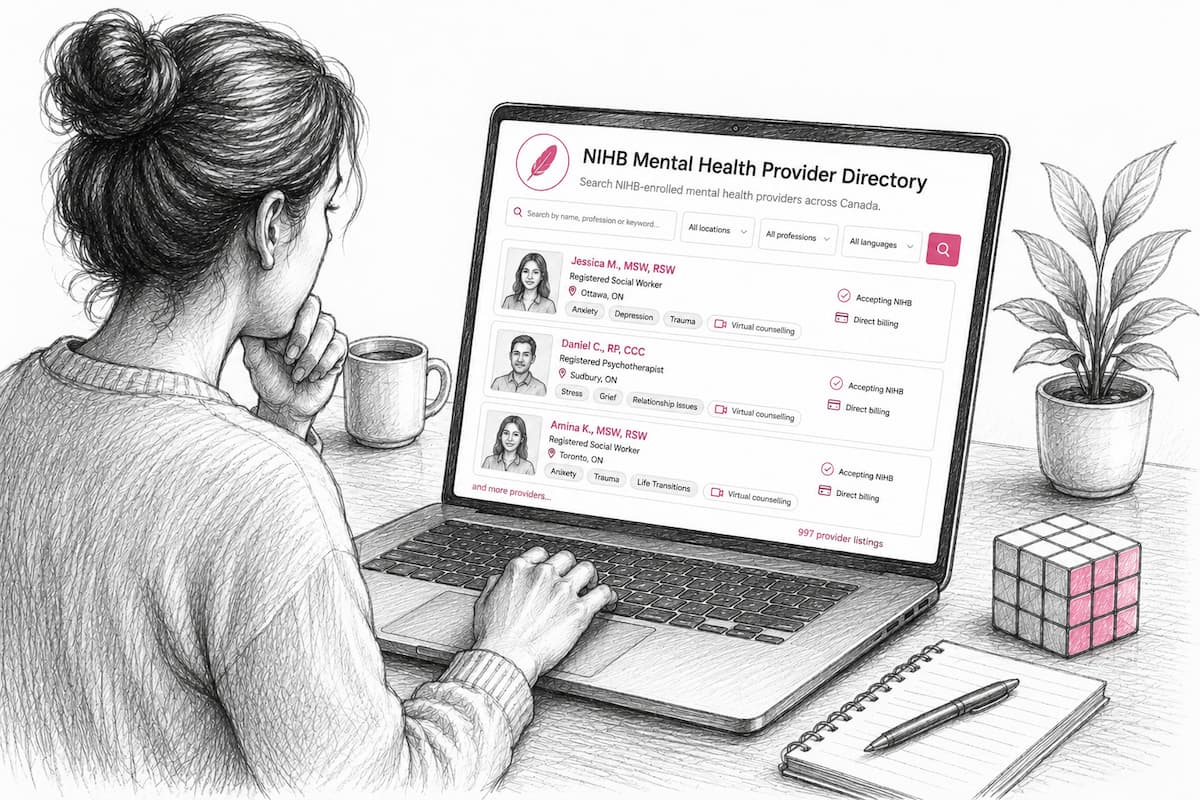
Looking for an NIHB mental health provider? Search over 10,000 listings across Canada by location, profession, virtual care, language and areas of support.
Quick Answers to Common NIHB Questions
Getting Started
Looking for a quick answer? Expand the questions below to learn about the most common aspects of NIHB mental health counselling.
Does NIHB Cover Therapy?
Yes. NIHB covers therapy, counselling, and psychotherapy for eligible First Nations and recognized Inuit clients when services are provided by an NIHB-enrolled mental health provider.
The program helps reduce financial barriers by covering short-term mental health counselling for concerns such as anxiety, depression, trauma, grief, relationship difficulties, stress, and many other mental health challenges. Approved providers bill NIHB directly through Express Scripts Canada, so eligible clients typically don't pay out of pocket for approved counselling sessions.
Your first two counselling hours don't require prior approval and are used for assessment and treatment planning. If additional sessions are clinically necessary, your therapist can submit a prior approval request to NIHB on your behalf. The number of sessions you receive is based on your individual needs and treatment plan.
📖 Learn More
Read the complete guide:
Will I Have to Pay Anything?
In most cases, no. If you're eligible for NIHB mental health counselling and your therapist is enrolled with the NIHB Program, they can usually bill NIHB directly through Express Scripts Canada. This means you typically won't have to pay out of pocket for approved counselling sessions.
Before your first appointment, your therapist will verify your NIHB eligibility and explain how the billing process works. Your first two counselling hours don't require prior approval, and if additional sessions are recommended, your therapist can submit the necessary approval requests on your behalf.
If you have another health insurance plan, it will generally be billed first, with NIHB acting as the payer of last resort for eligible services. Your therapist can explain how this applies to your individual situation.
📖 Learn More
Read the complete guide:
Do I Need a Referral?
No. You don't need a doctor's referral to access NIHB-funded mental health counselling or psychotherapy. Eligible First Nations and recognized Inuit clients can contact an NIHB-enrolled mental health provider directly to schedule their first appointment.
Your first two counselling hours don't require prior approval and are typically used for assessment and treatment planning. If ongoing counselling is recommended, your therapist will submit any required prior approval requests to NIHB on your behalf.
Some people confuse counselling with other NIHB health benefits that may require a referral, such as certain medical or dental services. However, for mental health counselling, you can usually contact an approved provider directly and begin the process without first seeing your family doctor or nurse practitioner.
📖 Learn More
Read the complete guide:
Can I Choose My Own Therapist?
Yes. You can choose the NIHB-enrolled mental health provider you would like to see. Finding a therapist you feel comfortable with is an important part of successful counselling, and you're not assigned a provider by the NIHB Program.
Many people choose a therapist based on factors such as their professional background, areas of expertise, therapy approach, availability, location, or whether they offer virtual appointments. Taking the time to find someone who feels like a good fit can help you build a strong therapeutic relationship and get the most from NIHB mental health counselling.
Before booking your first appointment, it's a good idea to confirm that the therapist is currently enrolled with NIHB and accepting new clients.
📖 Learn More
Read the complete guide:
How Do I Find an NIHB Therapist?
I have put together an online NIHB provider directory for mental health providers which you can check by clicking here.
Another option to find an NIHB therapist is to search for an NIHB-enrolled mental health provider in your area. Many therapists indicate on their website or professional profile that they accept NIHB and provide direct billing.
You can also use online directories such as Psychology Today, where many therapists note that they accept NIHB, or contact your local Indigenous health centre, Friendship Centre, band health department, or Indigenous Services Canada regional office for assistance finding an approved provider.
Before booking your first appointment, it's always a good idea to confirm that the therapist is currently enrolled with NIHB and accepts new clients.
📖 Learn More
Read the complete guide:
Accessing Counselling
Does NIHB Cover Online Counselling?
Does NIHB Cover Online Therapy?
Yes. NIHB covers virtual therapy for eligible First Nations and recognized Inuit clients when services are provided by an NIHB-enrolled mental health provider.
Virtual counselling may be offered by secure video or telephone, making it easier for people living in rural, remote, or northern communities to access professional mental health support without travelling. Many NIHB providers offer both in-person and virtual appointments, allowing you and your therapist to choose the format that best meets your needs.
Virtual counselling follows the same approval process as in-person therapy. Your first two counselling hours don't require prior approval, and if additional sessions are clinically necessary, your therapist can submit a prior approval request to NIHB on your behalf.
📖 Learn More
Read the complete guide:
Can I See a Therapist Outside My Community?
Yes. You aren't limited to seeing a therapist in your own community. As long as the provider is enrolled with the NIHB Program and authorized to practise in the province or territory where you're receiving care, you can often choose a therapist who best meets your needs.
Many people choose to see a therapist outside their local community for greater privacy, access to specialized services, or simply because they feel more comfortable speaking with someone they don't know personally. If travelling isn't practical, many NIHB-enrolled providers also offer secure online or telephone counselling, making it possible to receive therapy from almost anywhere in Canada.
Choosing a therapist who is the right fit is often more important than choosing the one who is closest to home.
📖 Learn More
Read the complete guide:
How Long Does Approval Take?
NIHB doesn't guarantee a specific approval timeline, but many routine prior approval requests are processed within 48 to 72 hours. The exact timeframe can vary depending on the complexity of the request, whether additional clinical information is needed, and current processing volumes.
Your first two counselling hours don't require prior approval, so you can usually begin your initial assessment without waiting. If your therapist recommends additional sessions, they'll submit a prior approval request on your behalf along with a treatment plan and supporting clinical information.
Once NIHB reviews the request, your therapist receives the decision and can schedule your remaining approved counselling sessions.
📖 Learn More
Read the complete guide:
Your Counselling Sessions
How Many Sessions Does NIHB Cover?
Eligible clients can access up to 22 hours of NIHB-funded mental health counselling each calendar year. The first two hours don't require prior approval and are typically used for assessment, treatment planning, and determining your counselling needs.
If ongoing therapy is recommended, your therapist can request approval for the remaining counselling hours on your behalf. Most counselling sessions are approximately 50 to 60 minutes long, although the exact length and frequency of appointments are based on your individual treatment plan.
If you reach your annual counselling limit and additional therapy is clinically necessary, your therapist may submit a request for extra sessions. These requests are reviewed by NIHB on a case-by-case basis and require clinical documentation supporting the need for continued counselling.
📖 Learn More
Read the complete guide:
How Often Can I Access NIHB Counselling?
NIHB doesn't require counselling to follow a fixed schedule. The frequency of your appointments is based on your individual needs and the treatment plan developed with your therapist.
Many people begin counselling with weekly appointments, particularly during the first several weeks of therapy. As they make progress, it's common to transition to appointments every two weeks, allowing time to practise new coping strategies while receiving ongoing support. If you're experiencing a mental health crisis or have more intensive treatment needs, your therapist may recommend meeting more frequently for a period of time.
Your counsellor will work with you to determine the schedule that best supports your goals and makes the most appropriate use of your available NIHB counselling sessions.
📖 Learn More
Read the complete guide:
What Can I Talk About in Counselling?
You can talk about anything that's affecting your mental health, emotional well-being, or quality of life. There isn't a "right" or "wrong" reason to seek counselling, and you don't have to be in crisis to benefit from speaking with a therapist.
People access NIHB-funded counselling for many different reasons, including anxiety, depression, stress, trauma, grief, relationship challenges, family concerns, chronic pain, burnout, substance use, major life changes, and coping with difficult emotions. Your therapist will work with you to better understand your concerns, identify your goals, and develop a treatment plan that meets your individual needs.
If you're unsure where to begin, that's completely okay. Many people start counselling simply by talking about what's been happening in their lives and how they've been feeling. Your therapist will help guide the conversation at a pace that feels comfortable for you.
📖 Learn More
Read the complete guide:
Can I Bring Someone With Me?
Sometimes. Whether someone can attend a counselling session with you depends on your goals, your therapist's clinical judgment, and whether having another person present would support your treatment.
For example, children and youth often have parents or caregivers involved in part of the counselling process. Adults may also choose to invite a spouse, partner, family member, or support person to a session if it's helpful and your therapist agrees. In some situations, your therapist may instead recommend family or couples counselling if that better meets your needs.
If you'd like someone to attend a session with you, talk with your therapist in advance. Together, you can decide whether it would be beneficial and how best to support your treatment goals.
📖 Learn More
Read the complete guide:
Can I Change Therapists?
Yes. If you feel your current therapist isn't the right fit, you can choose to see a different NIHB-enrolled mental health provider. Finding a counsellor you feel comfortable with is an important part of successful therapy.
People change therapists for many reasons, including differences in communication style, treatment approach, availability, location, or personal preference. If you decide to switch providers, your new therapist will review your situation, discuss your treatment goals, and explain any steps needed to continue your NIHB-funded counselling.
If you've already received approved counselling sessions, your new provider can help determine how your remaining approved hours or any future requests will be managed.
📖 Learn More
Read the complete guide:
Specialized Counselling
Can Children Use NIHB Counselling?
Yes. Eligible First Nations and recognized Inuit children can access NIHB-funded mental health counselling. Children who are registered, or eligible to be registered, under the Indian Act, as well as recognized Inuit children, may qualify for counselling benefits when they meet NIHB eligibility requirements.
Counselling can help children and youth experiencing concerns such as anxiety, depression, grief, trauma, behavioural challenges, family changes, school-related stress, and other mental health difficulties. Depending on the child's age and needs, therapy may involve parents or caregivers as part of the treatment process.
Like adult clients, the first two counselling hours don't require prior approval. If additional sessions are clinically necessary, the child's therapist can submit a prior approval request to NIHB on the family's behalf.
📖 Learn More
Read the complete guide:
→ NIHB Coverage for Children and Youth Mental Health Services
Does NIHB Cover Family Therapy?
Yes. NIHB may cover family counselling when it's clinically appropriate and supports the treatment of an eligible First Nations or recognized Inuit client. Services must be provided by an NIHB-enrolled mental health provider and meet NIHB program requirements.
Family counselling can be helpful when relationship dynamics, communication difficulties, parenting concerns, or major life events are affecting a person's mental health and well-being. In many cases, involving family members can strengthen treatment and provide additional support outside of counselling sessions.
As with individual counselling, the first two counselling hours don't require prior approval. If additional sessions are recommended, your therapist can submit a prior approval request to NIHB on your behalf.
📖 Learn More
Read the complete guides:
Does NIHB Cover Couples Counselling?
Yes. NIHB may cover couples counselling when it's clinically appropriate and supports the treatment of an eligible First Nations or recognized Inuit client. Services must be be provided by an NIHB-enrolled mental health provider and meet NIHB program requirements.
Couples counselling can be beneficial when relationship challenges are contributing to concerns such as stress, anxiety, depression, trauma, grief, or other mental health difficulties. Involving a partner in therapy may help improve communication, strengthen relationships, and support the client's overall treatment goals.
Like individual counselling, the first two counselling hours don't require prior approval. If ongoing couples counselling is recommended, your therapist can submit a prior approval request to NIHB on your behalf.
📖 Learn More
Read the complete guides:
After Counselling
What Happens After My Approved Sessions End?
Reaching the end of your approved NIHB counselling sessions doesn't necessarily mean your mental health journey is over. Depending on your progress and current needs, your counsellor may recommend completing therapy, requesting additional counselling sessions, or transitioning to other appropriate community supports.
If you and your therapist believe ongoing counselling is clinically necessary, they can submit a request to NIHB for additional sessions with supporting clinical documentation. If you've achieved your treatment goals, your counsellor may instead help you develop a plan to maintain your progress and discuss options should you need support again in the future.
The best approach depends on your individual circumstances, and your therapist will work with you to determine the most appropriate next steps.
📖 Learn More
Read the complete guide:
Can Additional Sessions Be Requested?
Yes. If your therapist believes you would benefit from continued counselling, they can request additional NIHB-funded sessions beyond the standard annual benefit. These requests aren't automatically approved and are reviewed by NIHB on a case-by-case basis.
To support the request, your therapist will typically provide updated clinical information explaining the progress you've made, your remaining treatment goals, and why continued counselling is medically necessary. NIHB considers this information when deciding whether additional sessions should be approved.
If your request is approved, your therapist can continue providing counselling under the new authorization. If additional sessions aren't approved, your therapist will discuss other appropriate supports and help you plan the next steps in your care.
📖 Learn More
Read the complete guide:
Privacy
Is NIHB Counselling Confidential?
Yes. NIHB-funded counselling is confidential. Although NIHB pays for eligible counselling sessions, your therapist works independently and isn't employed by the Government of Canada. Like any registered mental health professional, they must follow strict privacy laws, professional ethical standards, and confidentiality requirements.
Your therapist doesn't share the details of your counselling sessions with NIHB or Indigenous Services Canada. Information submitted to NIHB is generally limited to what's needed to verify eligibility, request approval for counselling, and process billing. Your personal conversations, thoughts, and experiences remain private.
There are a few legal exceptions to confidentiality that apply to all counselling, regardless of who pays for the service. For example, a therapist may be required to act if there's an immediate risk of serious harm to yourself or someone else, concerns about the abuse or neglect of a child, or another legal obligation to disclose information. Your therapist will explain confidentiality and these exceptions before counselling begins.
📖 Learn More
Read the complete guide:
Confirm NIHB Mental Health Counselling Eligibility
Wondering whether you qualify for NIHB mental health benefits? The program serves a specific group: First Nations persons registered under the Indian Act and Inuit recognized by an Inuit land claim organization.
Some Métis and other Indigenous individuals may qualify, but only when they also meet formal First Nations or Inuit registration criteria. In short, eligibility reflects federal Indigenous Services Canada definitions of a "Status Indian" or recognized Inuk.
The program is generally available for:
- registered First Nations individuals under the Indian Act
- recognized Inuit clients through an Inuit land claim organization
- Nunavut Land Claim Agreement (Nunavut) - Click for more info
- Inuvialuit Final Agreement (Northwest Territories) - Click for more info
- Labrador Inuit Land Claims Agreement (Nunatsiavut) - Click for more info
- James Bay Northern Quebec Agreement (Nunavik) - Click for more info
NIHB is administered federally through Indigenous Services Canada. Beyond Indigenous identity, you'll need to meet a few practical requirements. You must reside in Canada and be registered, or eligible for registration, under your provincial or territorial health insurance plan. As a federally funded initiative, NIHB provides coverage for health services not included in provincial or territorial plans.
To qualify, individuals generally must:
- be residents of Canada
- have valid NIHB eligibility (i.e., have a status number)
- provide appropriate identification or status documentation
Eligibility is not based on:
- employment status
- income
- whether you live on- or off-reserve
- city of residence within Province
Many clients verify eligibility through the NIHB Client Information Line using:
- a status card number
- NIHB client identification number
- Inuit identification number
Before beginning counselling services, it can also be helpful to confirm that your legal name, birth date, and identification records match federal records in order to avoid delays with billing or claims processing.
You can also contact an NIHB Mental Health provider and have them submit a prior approval to ensure you are eligible.
NIHB Prior Approval Process for Counselling
NIHB mental health counselling services require prior approval before ongoing sessions can continue.
Initial assessment sessions may sometimes proceed before full approval is finalized. However, additional counselling hours often require:
- clinical documentation
- treatment planning information
- requested session totals
- provider submissions
Once you've completed your initial two hours of assessment or counselling, your mental health provider takes the lead on the prior approval process, so you won't have to navigate the paperwork on your own.
Your provider verifies your NIHB eligibility, then completes the Mental Health Counselling Prior Approval/Claim Form, including your diagnosis, treatment plan, and the number of hours requested for sessions three through twenty-two.
They can submit everything electronically through the Express Scripts Canada NIHB web portal or by fax or mail.
Express Scripts Canada administers these benefits on behalf of Indigenous Services Canada, reviewing requests and typically issuing decisions within a few business days. Once approved, your provider can use direct billing to handle payment for both in-person and virtual sessions.
Indigenous Services Canada sets the policies, coverage rules, and the 22-hour annual limit behind it all.
In some areas, regional organizations—like the Nunatsiavut Government—manage their own mental health units and tailored forms.
If questions come up, regional contacts are there to help.
Find the regional contact closest to you.
What Documents Prove Your NIHB Eligibility
Anyone seeking NIHB coverage will need the right documentation to confirm eligibility before a provider can process a claim.
The right documentation confirms your eligibility, so gather it before your provider can process any NIHB claim.
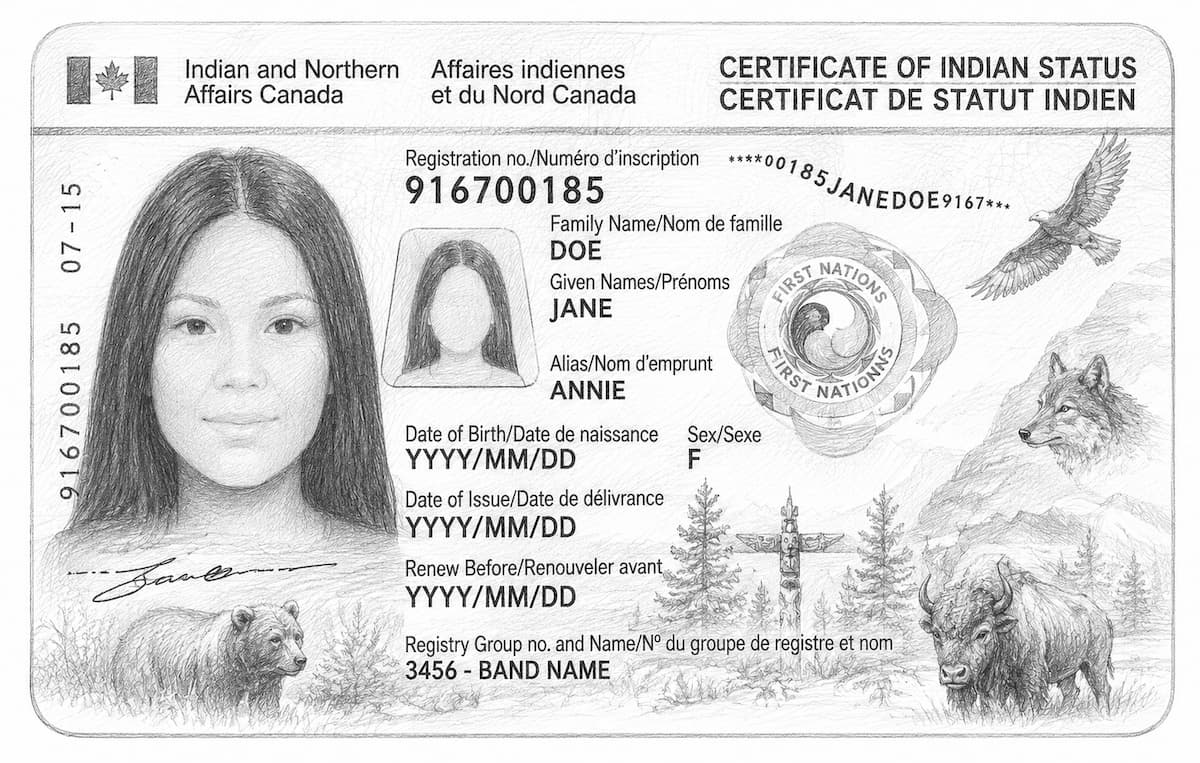
If you're a registered First Nations client, your Indian Status Card or Certificate of Indian Status, with its 10-digit Indian Act registration number, serves as primary identification.
When you don't have a status card, an NIHB client identification letter or card showing your N-number works instead.
Inuit clients can present documentation from land claim organizations like Nunavut Tunngavik Incorporated, Makivik Corporation, or the Inuvialuit Regional Corporation.
You'll also need a provincial or territorial health card, since NIHB only covers you when you're enrolled in a public health plan. You can present your Status Card as ID at healthcare providers, hospitals, or pharmacies to confirm your eligibility.
Make sure your documents display your registered surname and given names, your date of birth, and your client identification number.
If your NIHB card lacks a photo, bring matching photo ID.
Keeping this information consistent across documents helps you avoid frustrating claim delays.
Understanding the NIHB 22-Hour Counselling Limit
NIHB mental health counselling coverage commonly includes up to 22 counselling hours per calendar year (January 1 to December 31).
This often includes:
- an initial assessment of up to 2 hours
- additional counselling sessions using the remaining approved hours
Coverage is measured in hours rather than number of sessions, which means longer appointments may use approved hours more quickly. Because counselling needs vary significantly between individuals, some clients may require additional hours beyond the standard annual limit.
As a client nears the end of their 20 counselling sessions, they can request their provider submit another prior approval for additional sessions up to 20. To ensure continuity of care, it is recommended to do this around the 15 session mark to avoid any potential disruptions, especially if further documentartion is required.
If you were to start your NIHB mental health counselling sessions near the middle to end of September, the year will end before you have used 20 therapy sessions. Typically, this means you will start the new year, on January 1st, with a new prior approval of 20 counselling sessions, so long as your provider submits the prior approval on time to ensure continuity of care.
How Additional NIHB Counselling Hours Are Approved
Additional counselling hours beyond the standard annual limit may sometimes be approved through an exception-based review process.
Requests for additional coverage are generally submitted by the treating provider and may include:
- clinical concerns
- treatment goals
- symptom severity
- functional impairment
- progress updates
- rationale for continued counselling
Depending on the situation, more detailed clinical documentation may be required when requesting extended counselling support.
Individuals dealing with complex trauma, ongoing mental health concerns, significant stressors, or elevated safety risks may require additional sessions beyond the standard annual allocation.
What NIHB Mental Health Counselling Services Are Covered
NIHB mental health counselling services may include:
- individual therapy
- couples counselling
- family counselling
- group counselling
Counselling may support concerns such as:
- anxiety
- depression
- grief and loss
- trauma
- PTSD
- panic attacks
- relationship stress
- family conflict
- sleep problems
- chronic pain
- stress & burnout
- substance use
- caregiver stress
- adverse childhood experiences
- cultural identity concerns
Many NIHB-approved providers also incorporate trauma-informed, culturally informed, and client-centered approaches into their work.
What NIHB Won't Pay For
While NIHB covers a meaningful range of counselling and psychotherapy services, it doesn't pay for everything, and knowing the exclusions upfront can save you time, money, and frustration.
You won't get coverage if you don't have registered First Nations or recognized Inuit status, or if you aren't a Canadian resident. NIHB also acts as the payer of last resort, so it won't cover sessions already insured under provincial, territorial, or private plans.
Eligibility starts with status and residency, and since NIHB pays last, existing coverage comes first.
Setting matters, too. Counselling delivered outside Canada, at wellness retreats, or in large-group prevention sessions generally isn't eligible.
The same goes for services that aren't medically necessary, such as life coaching, career coaching, or psychoeducational assessments for academic placement. It also won't extend to unrelated supports like medical transportation to health services outside your community, which fall under separate NIHB benefits.
Court-ordered assessments, medico-legal reports, and expert witness opinions fall outside NIHB's scope since they're legal rather than clinical.
Finally, if your provider isn't registered with a provincial or territorial body, you won't receive reimbursement.
Finding an NIHB-Registered Provider
NIHB mental health counselling services generally require providers to be individually registered and approved through the NIHB program.
View the NIHB Directory here.
Eligible provider types may include:
- registered social workers
- psychologists
- registered psychotherapists
- psychiatric nurses
- other provincially regulated mental health professionals
Approval usually applies to the individual clinician rather than the clinic itself.
Clients may find NIHB-approved providers through:
- Indigenous Services Canada resources
- local First Nation health offices
- Friendship Centres
- Indigenous community organizations
- Counselling clinics offering NIHB-approved services
Because provider availability can change over time, it is often helpful to confirm active NIHB enrollment before booking appointments.
Another directory option for finding an NIHB mental health provider for counselling and psychotherapy services is to browse the PsychologyToday directory. A large percentage of therapists, especially those in private practice, will have a profile and listing on PyschologyToday and you can use the filter to show therapists that are registered as a NIHB provider.
It is still recommended to contact a potential therapist prior to booking to ensure they are in fact registered as a NIHB provider.
Which Mental Health Providers Can Bill NIHB?
When you're searching for a therapist, knowing which professionals can actually bill NIHB saves you time and frustration.
Knowing which providers can bill NIHB upfront saves you time, money, and unnecessary frustration on your healing journey.
NIHB recognizes mental health counselling as a distinct benefit area, and it relies on provincially or territorially licensed clinicians to deliver medically necessary services. To bill the program directly, a provider must hold an NIHB provider account, which requires registration with a regulatory body and formal NIHB approval through Express Scripts Canada's claims system. NIHB covers short-term crisis intervention mental health counselling for eligible clients.
Providers who commonly qualify include:
- Registered psychologists offering counselling and psychotherapy
- Registered or clinical social workers, where psychotherapy falls within their regulated scope
- Registered psychotherapists recognized by regional NIHB offices
- Counselling therapists accepted under "mental health counselling providers" language
- Some psychiatric nurses, when approved regionally
Keep in mind that unregulated helpers, such as life coaches or informal peer supporters, generally can't bill NIHB, since the program focuses on licensed, enrolled professionals.
In-Person and Virtual NIHB Counselling Options
Many providers now offer both in-person and virtual counselling through NIHB coverage. Video-conferencing and telephone counselling both qualify under the program, and your NIHB-approved provider can deliver these services through virtual platforms without seeking extra authorization. For eligible clients, these covered sessions are provided at no cost.
Virtual counselling may improve access for:
- rural communities
- remote communities
- individuals with transportation barriers
- clients seeking greater scheduling flexibility
For many common mental health concerns, research suggests that virtual therapy may provide outcomes comparable to in-person counselling when treatment remains structured and consistent.
Some individuals experiencing severe mental illness, acute crisis concerns, or complex medical needs may still benefit from more intensive or in-person supports depending on their circumstances.
Keep in mind that virtual sessions follow the same rules as in-person ones. They count toward your annual 22-hour limit, run the standard 50-60 minutes, and follow identical cancellation and documentation policies.
Direct billing works the same way too. Whether you're in Ontario, BC, or elsewhere, provincial boundaries won't restrict your access to these covered services.
How NIHB Direct Billing Works
Because direct billing removes the upfront cost of mental health care, it's often the feature that makes NIHB coverage feel genuinely accessible.
When you're an eligible First Nations or Inuit client, your enrolled provider sends claims directly to Express Scripts Canada, the program's contracted claims administrator, rather than asking you to pay and seek reimbursement later.
After each session, the provider submits the claim electronically using your NIHB client identification or band number, which confirms your eligibility and tracks how many of your annual counselling hours you've used.
Each claim includes standard details: provider identification, your NIHB number, the date of service, the session's duration, the type of counselling, and the fee charged.
These claims are adjudicated against NIHB fee guides, and payment goes straight to the provider, up to the maximum for that service code.
At many clinics, administrative staff handle everything, so your only step is showing up. At Good Medicine Wellness, the administrative team is experienced in NIHB billing, ensuring claims are submitted accurately on your behalf.
When a provider is enrolled with NIHB:
- claims may be submitted electronically
- clients may not need to pay upfront for eligible sessions
- billing is processed directly through ESC
Providers generally submit:
- client identification information
- service dates
- counselling type
- approved billing codes
- supporting documentation when required
Not all providers offer direct billing, which may affect how payment and reimbursement are handled.
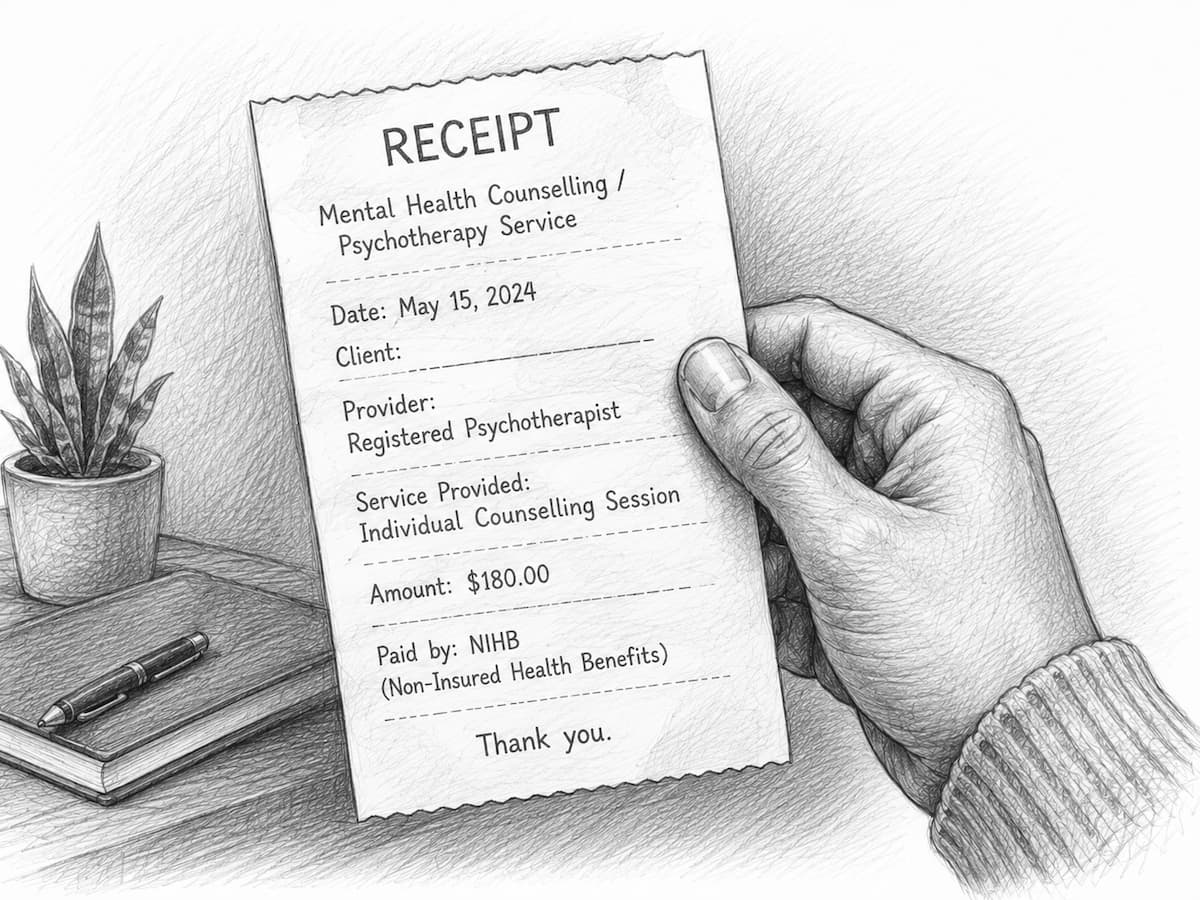
What to Do If Direct Billing Is Not Available
If a provider is not enrolled for direct billing, clients may still be eligible for reimbursement through NIHB. However, this situation would be considered rare as the majority of NIHB mental health providers have an online portal access to Express Scripts for direct billing.
This often involves:
- paying for counselling sessions upfront
- completing a reimbursement claim form
- submitting receipts and required documentation
- sending materials to NIHB or ESC for review
Receipts commonly need to include:
- provider name
- professional designation and registration number
- clinic contact information
- session dates
- fee amounts
- proof of payment
Many clients find it helpful to keep copies of all submitted documents and review reimbursement timelines carefully.
Understanding NIHB as a Payer of Last Resort
NIHB generally functions as a payer of last resort. This means NIHB only steps in after you've used any provincial, territorial, or private plans available to you.
The program covers health benefits that aren't already provided through other social programs, private insurance, or provincial and territorial health insurance. NIHB includes coverage for mental health counselling as part of its healthcare benefits.
This means that other available coverage sources are usually billed before NIHB coverage is applied, including:
- provincial coverage
- private insurance
- workplace benefits
- student health plans
- other third-party insurance
In practice, you'll need to explore and exhaust all other funding avenues first. If your province delivers core insured services or your private plan covers therapy sessions, those plans pay before NIHB considers your claim.
This design prevents duplicate payment for the same service and helps control costs.
Because NIHB generally covers 100% of eligible costs without deductibles or copayments, this last-resort approach guarantees other insurers bear primary responsibility wherever possible, reserving NIHB funding to fill genuine gaps in your care.
Understanding the order of billing ahead of time may help reduce claim delays or reimbursement complications.
Submitting NIHB Claims Through Express Scripts Canada
Clients and providers may use Express Scripts Canada to:
- submit claims
- review claim status
- manage reimbursement information
- coordinate benefits documentation
Submitting complete and accurate information can help reduce processing delays.
Depending on the claim type, supporting documentation may include:
- receipts
- referrals
- prior approval forms
- insurance statements
- provider registration details
Small paperwork errors or missing documentation can sometimes delay claims processing, so many clients find it helpful to review submissions carefully before sending them.
For NIHB mental health counselling services, the provider will almost always be the one submitting the claim through express scripts as their is an online portal used for submitting counselling hours.
Missed Appointments and Cancellation Fees
NIHB generally does not cover:
- missed appointments
- no-show fees
- late cancellation charges
Many counselling clinics maintain cancellation policies requiring advance notice, commonly between 24–48 hours.
Because cancellation fees are usually considered non-covered services, clients are often responsible for these costs directly.
A provider is unable to bill express scripts for your appointment due to last minute cancellations or no-shows. Reviewing clinic cancellation policies before beginning treatment may help avoid unexpected expenses.
Preparing for Your First NIHB Counselling Appointment
Before attending an intake appointment, it may be helpful to prepare:
- NIHB identification information
- status card or Inuit identification
- government-issued photo identification
- Health card
- contact information
- relevant referral documents if applicable
Having accurate identification and documentation available may help reduce administrative or billing complications during the intake process.
Combining NIHB Counselling With Hope for Wellness
Hope for Wellness provides 24/7 crisis and emotional support services for Indigenous individuals across Canada.
Support is available through:
- phone support
- online chat services
Hope for Wellness may provide:
- crisis intervention
- emotional support
- referrals to community resources
- stabilization support during difficult periods
Some individuals choose to combine:
- scheduled NIHB counselling
- community supports
- crisis support resources
depending on their needs and circumstances.
Here is a link to the Hope for Wellness website.
Finding Culturally Safe Therapy Under NIHB
When you're looking for a therapist who truly understands your experiences, culturally safe care under NIHB can make a meaningful difference in how comfortable and supported you feel throughout treatment.
Many NIHB-enrolled practices advertise direct billing alongside Indigenous-focused services, so you can search clinic websites, directories, or Indigenous-serving mental health organizations to find the right fit.
Look for providers who emphasize trauma-informed, culturally respectful psychotherapy that honours your identity, community connections, and lived experiences. The NIHB Program covers up to 22 hours of counselling per calendar year, with additional sessions available when needed.
When evaluating a potential therapist, consider whether they offer:
- Awareness of colonization's historical and ongoing impacts on mental health
- Non-pathologizing responses to intergenerational trauma and systemic racism
- Anti-oppressive practice and collaborative goal-setting
- Integration of your values and beliefs into assessment and treatment
- In-person or virtual options, which help if you live in a remote community
Because services can be accessed virtually, you're not limited to local providers, expanding your access to genuinely culturally grounded support.
Contact → info@stuartcameron.org
This article is intended for educational and informational purposes only and should not be considered medical, legal, or financial advice. NIHB policies, provider eligibility, and coverage procedures may change over time and can vary depending on individual circumstances. For the most current information, contact Indigenous Services Canada, Express Scripts Canada, or a qualified healthcare provider familiar with NIHB mental health counselling services. If you are experiencing a mental health crisis or require urgent support, contact emergency services, 9-8-8, or Hope for Wellness immediately.