NIHB Coverage for Children and Youth Mental Health Services

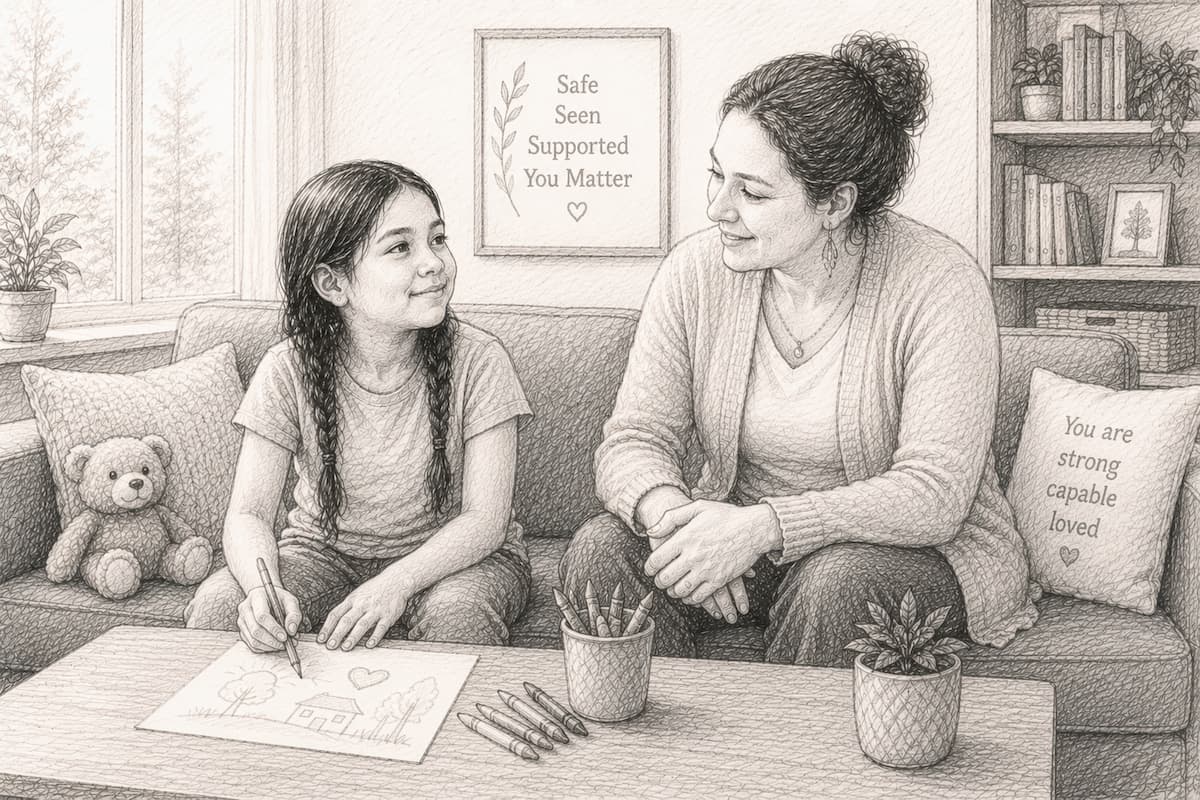
When your child struggles, the weight settles on the whole family. The Non-Insured Health Benefits (NIHB) program recognizes this by providing mental health counselling coverage for eligible First Nations and Inuit children and youth.
Counselling services are available at no cost to eligible families and can be accessed in person, by phone, or through secure video sessions. Family and caregiver involvement may also be included when it supports the child's treatment goals.
Key Takeaways
- Registered First Nations children and recognized Inuit youth may qualify for NIHB mental health coverage.
- Counselling services are available at no out-of-pocket cost through eligible providers.
- Services can be delivered in person, by phone, or through secure video.
- Family and caregiver sessions may be covered when they support the child's mental health goals.
- Additional supports may be available through Jordan's Principle and the Inuit Child First Initiative.
Who Qualifies for NIHB Mental Health Coverage?
Eligibility is based on Indigenous status rather than age.
Registered First Nations children and youth under the Indian Act, along with Inuit recognized through an Inuit Land Claim Organization, may qualify for NIHB mental health benefits. To access services, families generally need a valid NIHB client identification number.
In some cases, infants under two years of age may be covered through an eligible parent until their own registration is finalized.
Coverage may help address concerns such as:
- Anxiety
- Depression
- Trauma
- Grief and loss
- Family difficulties
- Stress and emotional challenges
If you are unsure about eligibility, it is best to contact NIHB directly or speak with an NIHB-approved provider.
What Mental Health Services Are Covered?
NIHB covers professional mental health counselling provided by eligible, regulated professionals.
Services may include:
- Individual counselling
- Family counselling
- Group counselling
- Short-term mental health interventions
- Trauma-informed and culturally responsive counselling
Counselling can be delivered either in person or virtually, allowing families greater flexibility when local services are limited.
The goal of the benefit is to provide practical mental health support that helps children and youth develop coping skills, improve emotional wellbeing, and address challenges affecting daily life.
Family and Caregiver Involvement
Mental health concerns rarely affect only the child. NIHB recognizes that parents, guardians, and caregivers often play an important role in recovery and wellbeing.
Family and caregiver sessions may be covered when they directly support the child's treatment plan and mental health goals.
Examples may include:
- Parent coaching and support
- Family counselling sessions
- Caregiver-only appointments that support the child's progress
- Involvement of significant caregivers identified by the treatment team
The child or youth remains the primary client, and documentation must demonstrate how caregiver involvement contributes to positive mental health outcomes.
In-Person, Phone, and Virtual Counselling Options
Families can often choose the format that best fits their circumstances.
NIHB supports:
- In-person counselling
- Telephone counselling
- Secure video counselling
Virtual options can be especially helpful for families living in rural, northern, or remote communities where access to local mental health services may be limited.
Many therapists now offer flexible models that combine virtual and in-person appointments depending on family needs and preferences.
Additional Supports Beyond NIHB
Some children and youth may require services that fall outside standard NIHB mental health coverage.
For First Nations children, Jordan's Principle may help fund additional supports, services, and programs when unmet needs exist.
For Inuit children, the Inuit Child First Initiative provides access to a range of health, social, educational, and cultural supports, including certain mental health services and assessments.
These programs help ensure that children receive the services they need without unnecessary delays or service gaps.
The Importance of Culturally Safe Care
Many Indigenous families prefer services that recognize the impact of colonization, intergenerational trauma, culture, language, community, and identity.
Increasingly, NIHB-funded providers are incorporating culturally responsive and trauma-informed approaches into their work with children and youth.
Families may also choose to combine professional counselling with cultural supports, community programs, Elder guidance, or land-based healing opportunities where available.
Final Thoughts
NIHB mental health coverage helps eligible First Nations and Inuit children and youth access counselling services without financial barriers.
Whether your child is struggling with anxiety, depression, trauma, grief, or other emotional challenges, NIHB can help connect your family with professional support through in-person or virtual counselling options.
When additional services are needed, programs such as Jordan's Principle and the Inuit Child First Initiative may help fill important gaps and ensure children receive the care they need.
This article is intended for educational and informational purposes only and should not be considered medical, legal, or financial advice. NIHB policies, provider eligibility, and coverage procedures may change over time and can vary depending on individual circumstances. For the most current information, contact Indigenous Services Canada, Express Scripts Canada, or a qualified healthcare provider familiar with NIHB mental health counselling services. If you are experiencing a mental health crisis or require urgent support, contact emergency services, 9-8-8, or Hope for Wellness immediately.