Traditional Indigenous Approaches to Mental Wellness

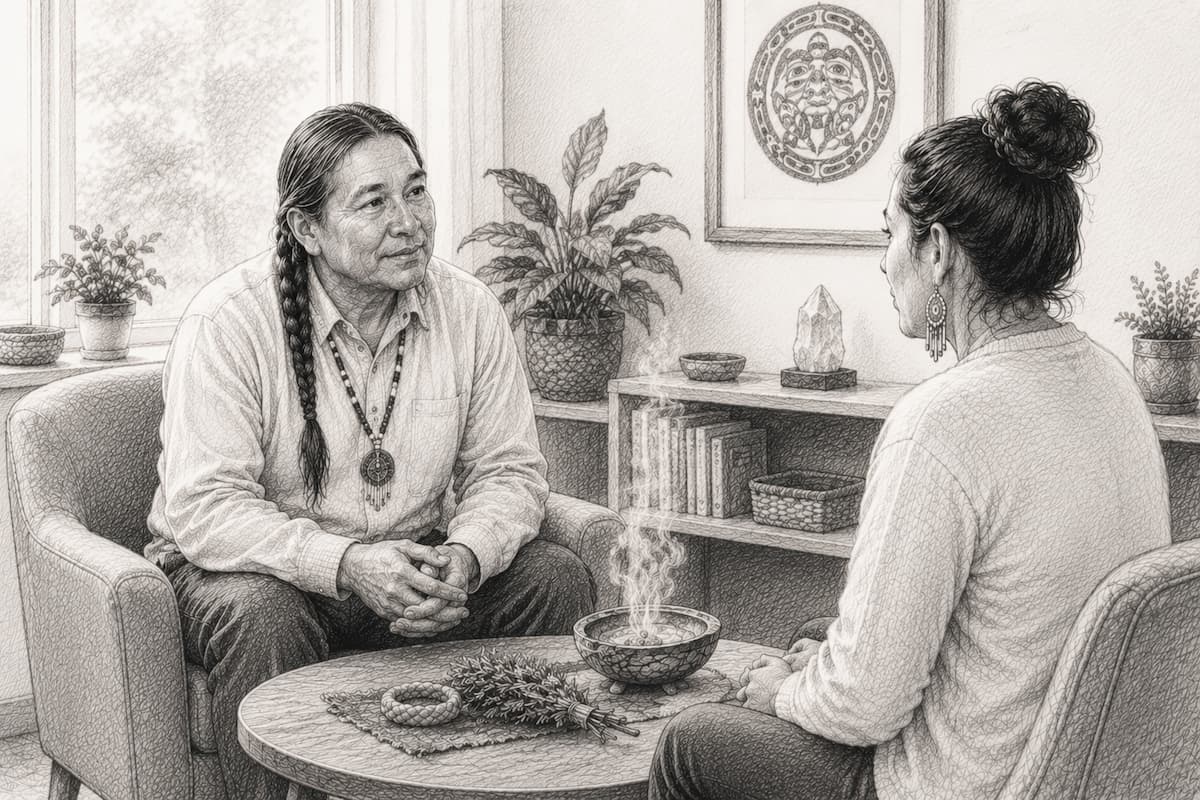
When you think of healing, you might picture a quiet office and a one-on-one conversation. Indigenous approaches offer something broader. They view mental wellness as balance among your mental, physical, emotional, and spiritual dimensions—and as connection to community, land, and ancestors.
Distress signals a broken relationship, not just a personal struggle. Understanding how this holistic vision works, and why it endures, reveals something many modern systems have only begun to recognize.
Key Takeaways
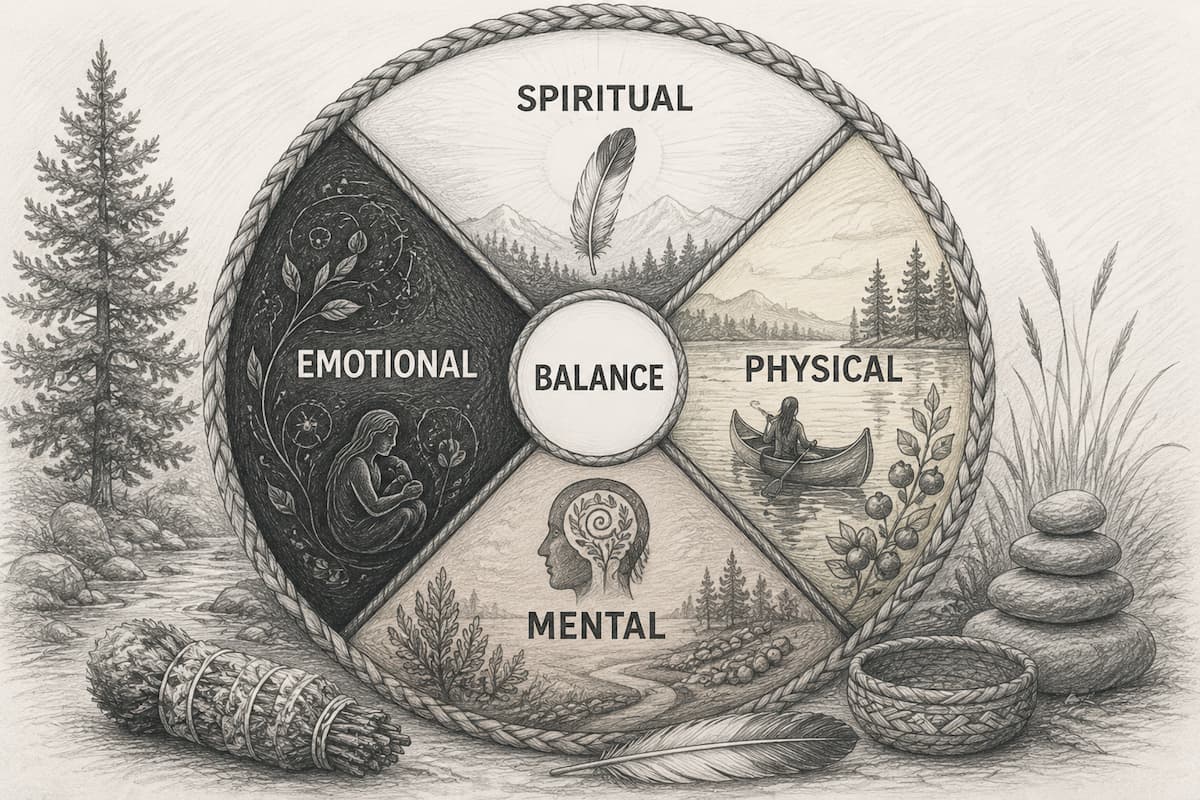
- Indigenous wellness emphasizes balance among mental, physical, emotional, and spiritual aspects, as illustrated by the Anishinaabe Medicine Wheel.
- Healing occurs through community connection, with family and relatives involved, rather than treating distress as individual pathology.
- Ceremonies like sweat lodges, sun dances, and vision quests provide structured healing that addresses underlying causes of distress.
- Connection to traditional land, language, and Elders reduces stress, strengthens identity, and lowers rates of suicide and distress.
- Integrating traditional healing with Western mental health care offers complementary approaches that reduce symptom severity and build cultural trust.
What Makes Indigenous Mental Wellness Different
When you explore Indigenous approaches to mental wellness, you'll notice they start from a fundamentally different premise than Western clinical models. Rather than defining wellness as the absence of illness, many Indigenous frameworks describe it as balance among the mental, physical, emotional, and spiritual aspects of life.
The Anishinaabe Medicine Wheel illustrates this idea, representing interconnected life domains where health means harmony among all quadrants.
The Medicine Wheel reminds us that true health is harmony—balancing every quadrant of our interconnected lives.
This perspective changes how you understand distress. Instead of viewing it solely as individual psychopathology, Indigenous worldviews often interpret it as an imbalance in your relationships with self, community, land, and spirit. Increasingly, scientific findings validate these Indigenous teachings on mental health.
Where Western models tend to emphasize individualism, material success, and symptom-focused treatment, Indigenous approaches frame mental illness as a communal and systemic challenge linked to broader conditions.
In other words, you're not seen as a problem to fix in isolation, but as part of a larger, interconnected whole.
Why Healing Happens in Community, Not Alone
Because Indigenous worldviews define health as balance among mind, body, spirit, community, and the natural world, healing can't happen in isolation—it arises through connection.
When you understand distress as a disruption of relationships rather than a personal failing, you naturally turn toward others for restoration. In Navajo healing, for example, family, extended relatives, neighbors, and friends participate together, treating the return to balance as a collective undertaking rather than solitary self-work.
This relational approach changes who's responsible for your recovery. Instead of managing suffering alone, you share accountability with your community, which normalizes mutual support and discourages isolation.
That shift matters because isolation consistently ranks among the strongest risk factors for psychological distress, while regular contact with family, Elders, and community groups buffers you against it. This communal foundation is especially vital given that serious psychological distress is disproportionately higher among Indigienous people in Canada than the general population.
When you reframe mental illness as a communal challenge, you invite collective responsibility—and that shared care often becomes the very source of your healing.
Ceremonies and Traditional Healing That Restore Balance
If you've understood healing as a return to balance among mind, body, spirit, and emotions, then ceremony becomes the practical means by which that balance is restored.
Across many First Nations territories, you'll encounter major ceremonies like the sweat lodge, shaking tent, sun dance, fasting, and vision quest, each guided by recognized healers and ceremonial conductors. These aren't symbolic gestures; they're structured healing processes.
Prayer, drumming, sacred pipes, and offerings such as tobacco enact relationships with Spirit, Creator, and the Universe, drawing on a life source that supports wellness.
Many gatherings extend for days or even weeks, involving patients, families, and entire communities in sustained spaces for transformation.
When you're grieving, an all-night comfort ceremony offers time for sharing stories, songs, and prayers, supporting emotional release after loss.
Through these practices, you don't just treat a symptom—you address the underlying emotional, spiritual, and relational causes that disrupted your harmony. Incorporating these traditional practices can improve health outcomes and lead to better long-term results for individuals, families, and communities.
How Land, Language, and Elders Protect Mental Health
Ceremony restores balance in concentrated moments, but the conditions that protect mental health over a lifetime grow from deeper, ongoing relationships—with the land beneath your feet, the language your ancestors spoke, and the Elders who carry both forward.
When you spend time on traditional territory, harvesting or simply learning from the land, you reduce stress, lift your spirits, and ground yourself in an identity that colonization tried to sever. This kind of land-based treatment reconnects individuals to traditional wellness practices.
Language works alongside this connection, because traditional languages encode place-based knowledge, ancestral stories, and values that reinforce meaning, purpose, and a positive sense of self.
Research links cultural continuity, including language revitalization, to lower rates of suicide and psychological distress.
Elders complete this web of protection. As knowledge keepers, they transmit teachings that support emotional regulation, coping, and resilience, and they lead land-based healing that draws youth in.
Their relationships enhance your connectedness, belonging, and hope—foundations of recovery.
Blending Traditional Healing With Western Mental Health Care
When traditional healing and Western mental health care work together, you get the benefit of two systems that approach wellness from different angles but share the same goal. Researchers describe several ways these systems connect, including parallel care, collaborative care, and fully integrated models where traditional healers often serve as your first point of contact before referral or shared management with clinicians.
These blended approaches treat conditions like depression, psychosis, substance use, and severe distress, particularly in Indigenous communities.
The results matter. When ceremonies, talking circles, smudging, prayer, and storytelling sit alongside Western diagnosis and therapy, you're more likely to stay engaged and follow through with treatment.
Studies link this combination to reduced symptom severity and stronger emotional balance.
Just as importantly, recognizing traditional healing as legitimate builds cultural safety and trust. When your beliefs and cosmologies are respected rather than dismissed, mainstream services become far more acceptable. This mirrors how Western therapies have increasingly integrated Eastern practices, with holistic psychotherapists combining conventional treatments with methods like yoga, breathing techniques, acupuncture, and meditation.
This article is intended for educational and informational purposes only and should not be considered medical, legal, or financial advice. NIHB policies, provider eligibility, and coverage procedures may change over time and can vary depending on individual circumstances. For the most current information, contact Indigenous Services Canada, Express Scripts Canada, or a qualified healthcare provider familiar with NIHB mental health counselling services. If you are experiencing a mental health crisis or require urgent support, contact emergency services, 9-8-8, or Hope for Wellness immediately.