Indigenous Mental Wellness Resources in Canada

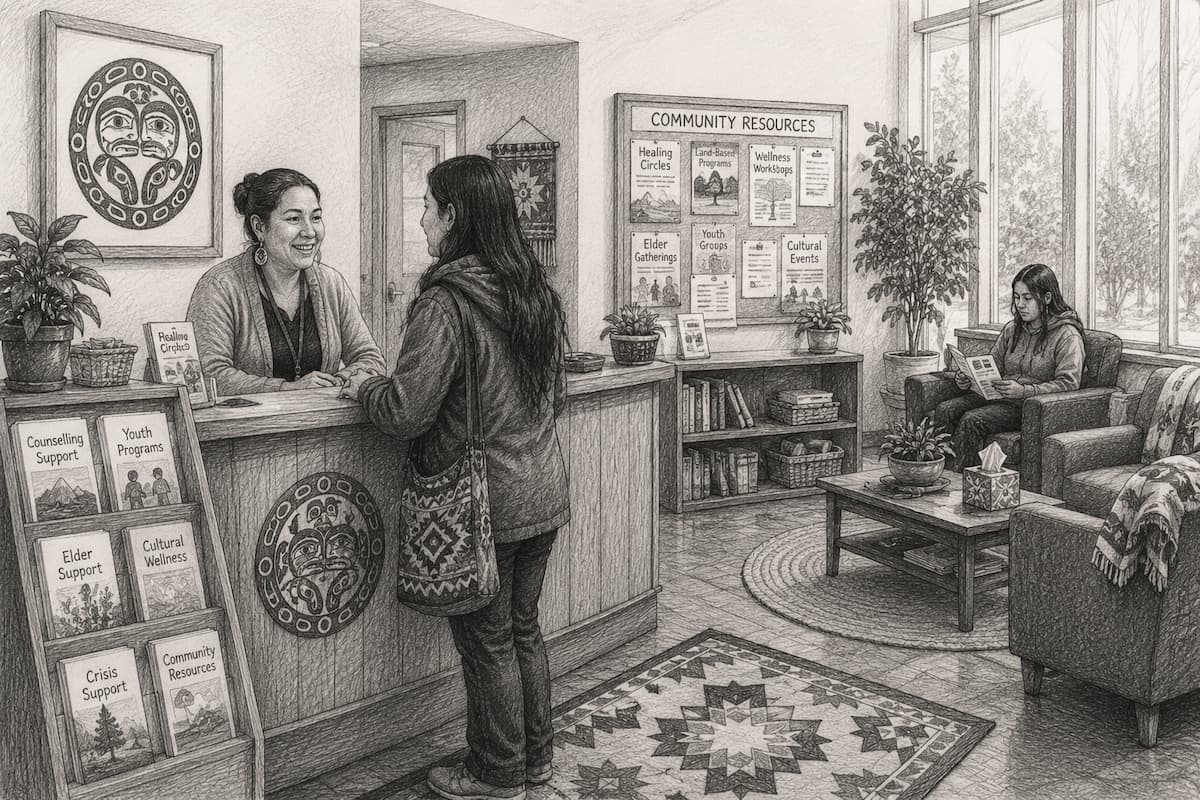
When a single phone call can become a lifeline, you start to see how much access truly matters. Indigenous communities face mental health challenges shaped by history, culture, and circumstance, yet the right resources can make a real difference.
You'll find crisis support, culturally grounded care, and tools built with Native people in mind. Knowing where to turn isn't always obvious, but it doesn't have to stay that way.
Key Takeaways
- 988 Suicide & Crisis Lifeline offers free, confidential 24/7 support, including Washington's Native and Strong Lifeline staffed by Indigenous counselors.
- National centers like One Sky Center coordinate culturally grounded mental health and substance use services for Native communities.
- Directories such as Psychology Today, TherapyTribe, and Zencare help locate Indigenous-focused therapists filtered by cultural responsiveness and region.
- Youth resources like We R Native and BRAVE address suicide, bullying, and substance use through culturally rooted, accessible support.
- StrongHearts Native Helpline (1-844-762-8483) provides 24/7 confidential advocacy for Native survivors of domestic, dating, or sexual violence.
Crisis and Helpline Support for Native Communities
When you or someone you care about is facing a mental health crisis, knowing where to turn can make all the difference. The 988 Suicide & Crisis Lifeline gives you free, confidential, 24/7 support by phone, text, or chat, and it hosts a resource page centered on Indigenous historical trauma, community strengths, and culturally relevant coping.
Canada-Wide Resources
- Hope for Wellness Help Line: Offers immediate, toll-free crisis intervention and mental health counseling across Canada. Services are available in English, French, Cree, Ojibway, and Inuktitut.
- Phone: 1-855-242-3310
- Website: Hope for Wellness
- National Indian Residential School Crisis Line: Provides support for former students and those impacted by the trauma of residential schools.
- Phone: 1-866-925-4419
- MMIW Crisis Line: A national, toll-free service offering support to anyone impacted by the issue of Missing and Murdered Indigenous Women, Girls, and 2SLGBTQQIA+ people.
- Phone: 1-844-413-6649
- Kids Help Phone: Provides confidential and anonymous counseling for youth. Callers can also text with an Indigenous crisis responder.
- Phone: 1-800-668-6868
- Text: Text
FIRST NATIONS,INUIT, orMETISto 686868 for youth, or to 741741 for adults.
- 9-8-8 Suicide Crisis Helpline: A Canada-wide, three-digit line providing immediate, free, 24/7 suicide prevention support.
- Dial/Text: 9-8-8
Indigenous Women-Specific Services
- Talk 4 Healing: A culturally grounded, fully confidential help line for Indigenous women in Ontario (accessible via phone, text, and live chat).
- Phone: 1-855-554-4325
- NWAC Elder Support Line: A toll-free line managed by the Native Women's Association of Canada to provide culturally sensitive elder support.
- Phone: 1-888-664-7808
Regional Supports
- Métis Nation of Ontario (MNO) Crisis Line: 24-hour mental health and addiction crisis line for adults, youth, and families, in English and French.
- Phone: 1-877-767-7572
- KUU-US Crisis Line Society (British Columbia): 24-hour provincial crisis services for Indigenous individuals.
- Adult/Elder Line: 250-723-4050
- Child/Youth Line: 250-723-2040
- Toll-Free: 1-800-588-8717
- Native Youth Crisis Hotline: 24/7 support specifically for Indigenous youth across Canada and the US.
- Phone: 1-877-209-1266
For more information on finding targeted federal, provincial, and local resources, you can visit the Government of Canada's Mental Health Services Page
Hope for Wellness Helpline and 24/7 Crisis Support
The Hope for Wellness Helpline stands as a national lifeline dedicated to First Nations, Inuit, and Métis people across Canada, offering immediate, culturally safe counselling and crisis intervention to anyone experiencing distress, trauma, or mental health concerns.
Whether you're struggling with anxiety, depression, grief, substance use, family conflict, or suicidal thoughts, you can reach trained counsellors at any hour. The helpline operates 24 hours a day, seven days a week, year-round, so support's always within reach. Beyond English and French, support is also available in Cree, Ojibway, and Inuktitut upon request.
Call the toll-free number, 1-855-242-3310, from anywhere in the country, or use the real-time online chat at hopeforwellness.ca if you prefer text-based support. You won't need a health card, an appointment, or any payment, and your interaction stays confidential and anonymous.
Counsellors experienced in Indigenous mental health provide de-escalation, emotional support, and safety planning, connecting you to local services when ongoing care's needed.
Whether you live on-reserve, urban, rural, or remote, you'll receive equal access.
How to Access Indigenous Mental Wellness Care
Beyond crisis lines like Hope for Wellness, you'll find a broader network of programs designed to support ongoing Indigenous mental wellness, though knowing where to start can feel overwhelming.
If you live in a First Nations or Inuit community, your local health centre, nursing station, or band office can connect you to ISC-funded mental wellness teams offering counselling, case management, and culturally grounded programming. You can also request free consultations with Elders through the Traditional Healers Program.
Former residential school students and their families can access dedicated counselling through the Indian Residential Schools Resolution Health Support Program, coordinated by regional Indigenous organizations.
Healing is your right—dedicated counselling supports residential school survivors and their families through culturally rooted, community-coordinated care.
For covered counselling, the Non-Insured Health Benefits program funds sessions with registered therapists and can even cover medically necessary travel.
If you're in an urban area, you might combine NIHB, provincial insurance, sliding-scale clinics, and university training clinics to reduce costs.
Friendship centres and Indigenous organizations can help you navigate funding, complete forms, and find culturally safe counsellors who accept these arrangements.
Why Indigenous Mental Health Needs Run Higher
When you look at the numbers, it becomes clear that Indigenous communities carry a heavier mental health burden than the general population, and that disparity isn't accidental. Almost half of First Nations people living off reserve (47%) reported needing mental health care, compared with 43% of Métis and 35% of Inuit—rates that all exceed the non-Indigenous population.
Suicide tells an even starker story: rates run at least twice as high overall, about three times the national average for First Nations, and up to nine times in some northern Inuit communities. Among youth aged 15 to 24, rates reach five to six times those of other Canadian youth.
These outcomes trace back to root causes you can't ignore. The Indian Residential School system fractured families, disrupted parenting, and transmitted trauma across generations. Compounding the problem, among those who sought mental health care, only 28% of First Nations off-reserve reported their needs were fully met, compared with 23% of Métis and 22% of Inuit.
Combined with ongoing discrimination, poverty, and cultural loss, these forces fuel persistent grief, depression, and distress.
Inside the First Nations Mental Wellness Continuum
Addressing disparities this deep requires more than scattered programs and short-term funding, and that's precisely the gap the First Nations Mental Wellness Continuum aims to close.
Developed through partnership among the Assembly of First Nations, Health Canada's First Nations and Inuit Health Branch, and Indigenous mental wellness organizations, the framework places culture at the center, treating ceremony, language, land, and identity as primary determinants of wellness.
You'll find it recognizes interconnected spiritual, emotional, mental, and physical dimensions rather than narrow, illness-focused care.
The continuum spans promotion, prevention, early identification, intervention, crisis response, relapse prevention, and ongoing aftercare, so support doesn't simply disappear after a single visit.
It integrates services across life stages, from perinatal care through Elders, blending land-based healing, ceremonial practices, clinical care, and substance use treatment. The model also rests on supporting layers such as governance, research, workforce development, and performance measurement that sustain mental wellness over time.
Trauma-informed approaches address intergenerational trauma, grief, and loss, while Elders and healers remain essential partners in planning, delivery, and evaluation.
What Hope, Belonging, Meaning, and Purpose Mean
Hope, belonging, meaning, and purpose form the foundation of the First Nations Mental Wellness Continuum, and understanding what each one actually means helps you see why culture sits at the center of healing.
Hope is your confidence that life can improve, paired with belief in healing from trauma through collective resilience and cultural strengths. Hope also drives optimism about the future for individuals and families.
Belonging is the feeling that you're accepted, valued, and connected within family, community, Nation, and to land and ancestors, supported by kinship networks, clan systems, and guidance from Elders.
Meaning is your sense that life is coherent and rooted in Indigenous worldviews, teachings, and identity, including knowledge of language, clan, and place within Creation.
Purpose is having valued roles and responsibilities, like caregiving, land stewardship, or cultural leadership, that contribute to future generations.
Together, these four elements link your personal wellness with collective wellbeing, transforming stories of trauma into narratives of survival and strength.
Culturally Grounded Wellness Programs Across Canada
Because hope, belonging, meaning, and purpose can't take root in isolation, communities across Canada have built mental wellness programs that translate these principles into everyday practice.
A national environmental scan identified 117 programs serving First Nations, Inuit, and Métis youth, with nearly a third explicitly youth-targeted and most delivered in community-based, culturally grounded formats.
You'll find these programs emphasize culture, language, and collective responsibility rather than symptoms alone, integrating emotional, mental, physical, and spiritual dimensions of wellness. This holistic approach reflects how true healing is defined by Indigenous perspectives, not merely the absence of disease.
Research points to three components that consistently improve outcomes: community control and leadership, the integration of cultural practices, and capacity building for local facilitators.
In practice, you'll see land-based activities, cultural camps, and language-embedded programming used for prevention and early intervention.
National efforts, including those from the Mental Health Commission of Canada, add tailored mental health literacy and training that prioritize cultural safety and community-led delivery, ensuring services genuinely reflect the people they serve.
This article is intended for educational and informational purposes only and should not be considered medical, legal, or financial advice. NIHB policies, provider eligibility, and coverage procedures may change over time and can vary depending on individual circumstances. For the most current information, contact Indigenous Services Canada, Express Scripts Canada, or a qualified healthcare provider familiar with NIHB mental health counselling services. If you are experiencing a mental health crisis or require urgent support, contact emergency services, 9-8-8, or Hope for Wellness immediately.