Online Therapy Through NIHB

Imagine carrying a heavy backpack for months, only to learn you could've set it down weeks ago—that's how many people feel when they finally discover NIHB online therapy.
If you're a First Nations or Inuit individual in Canada, you may qualify for up to 22 hours of covered counseling each year, accessible from home. But who exactly qualifies, and how does the process actually work?
Key Takeaways
- NIHB covers online therapy for registered First Nations and recognized Inuit clients who meet mental health criteria and reside in Canada.
- Clients receive up to 22 counselling hours per calendar year, applicable to both online and in-person sessions.
- The first two hours can be used for intake and assessment without requiring prior approval from NIHB.
- Find enrolled providers through regional NIHB offices, therapist directories with insurance filters, or "NIHB-registered" clinics offering direct billing.
- Online sessions use secure videoconferencing with identity verification, informed consent, and backup plans for connection failures.
Who Qualifies for NIHB Online Therapy?
Who qualifies for NIHB online therapy? You qualify if you're an NIHB client and you meet the program's mental health criteria. That means you're either a registered First Nations person under the Indian Act or an Inuit person recognized by a land claim organization and living in Canada.
You qualify for NIHB online therapy as a registered First Nations or recognized Inuit client meeting the program's mental health criteria.
Infants under one year are covered when their parent or primary caregiver is eligible. You'll generally need to reside in Canada and qualify for a provincial or territorial health plan, though if your health services fall under a correctional or comparable program, you typically won't be eligible.
Eligible children and family members covered by NIHB also qualify for services.
Beyond client status, you qualify for counselling when you're facing significant psychological distress or functional impairment suited to short-term, goal-focused therapy. Common concerns include trauma, grief, depression, anxiety, substance use, and relationship stress.
For the online format specifically, you'll need a private space, a phone or internet-enabled device, and an NIHB-recognized provider licensed in your location.
How Many Counselling Hours Does NIHB Cover?
How many hours of counselling does NIHB actually cover? Under the standard benefit, you're entitled to up to 22 counselling hours per calendar year, and this same limit applies whether you meet your therapist in person or online.
Because coverage is measured in hours rather than a fixed number of sessions, you get some flexibility in how long each session runs. With common 50- to 60-minute appointments, those 22 hours stretch across roughly 20 total sessions annually. If you reach your limit, additional hours may be approved based on clinical appropriateness when your provider submits the proper justification.
You can use up to 2 hours without prior approval, which usually goes toward intake, assessment, and planning. After that, your provider needs to submit a prioar approval request through Express Scripts, which can include a treatment plan, to NIHB for the remaining hours.
Keep in mind that some clinics frame coverage as 20 hours, reflecting their own policies within the broader NIHB framework. Either way, the hourly structure helps you and your counsellor plan your year thoughtfully.
How to Find NIHB Therapists for Online Therapy
Where do you begin when you're looking for a therapist who offers online counselling covered by NIHB? Start with your regional NIHB office. Indigenous Services Canada recommends contacting these offices, organized by province and territory, to request lists of enrolled counsellors, psychologists, and social workers.
You can specifically ask for providers who deliver virtual care by phone or secure video, and staff can confirm whether a clinic advertising NIHB coverage is genuinely enrolled.
Next, turn to therapist directories, such as PsychologyToday.com. Many include insurance filters like "Non-Insured Health | First Nations," letting you narrow results by online modality, province, language, specialty, and cultural focus. Review each provider's profile, training, and therapeutic approach before deciding.
You can also explore Indigenous health organizations and private clinics that advertise NIHB-covered virtual counselling. Clinics often label themselves "NIHB-registered" or "Indigenous Mental Health | NIHB" and explain how direct billing applies to your telehealth sessions, simplifying the process considerably.
What to Expect in a Secure Online Session
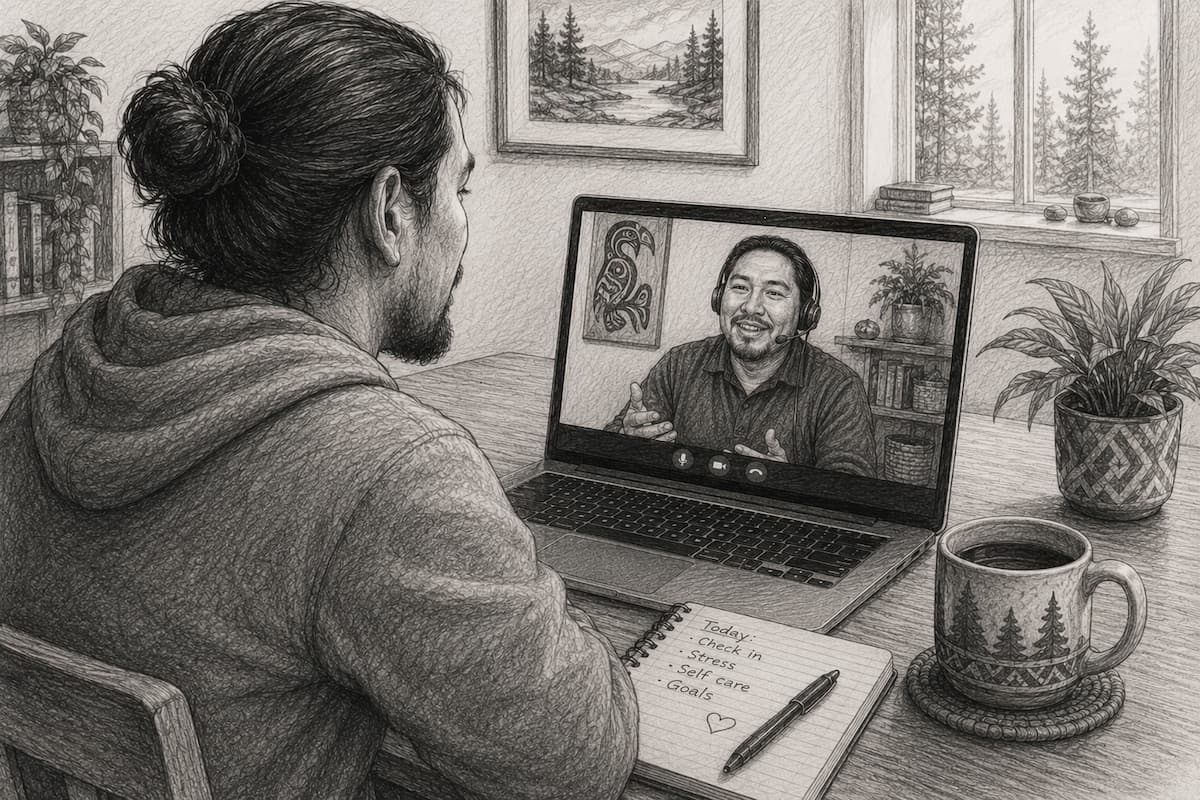
When you join a secure online session under NIHB, you can expect an experience that mirrors in-person care in nearly every meaningful way, with the added comfort of attending from a private space at home.
Your therapist connects through a secure videoconferencing platform designed to protect your confidentiality and data privacy. At the start, you'll verify your identity and complete informed consent, which explains how video sessions work, the potential risks like technical interruptions, and the rare circumstances where confidentiality may be broken for safety reasons.
Your first session can run up to two hours for a thorough assessment, while later appointments follow a structured, short-term protocol. You'll also agree on a backup plan, such as a phone call, in case the connection fails.
If you're ever in crisis, your therapist can connect you to 24/7 resources, including national lifelines and Indigenous-specific support lines, ensuring your safety throughout.