Indigenous Youth Mental Health Resources

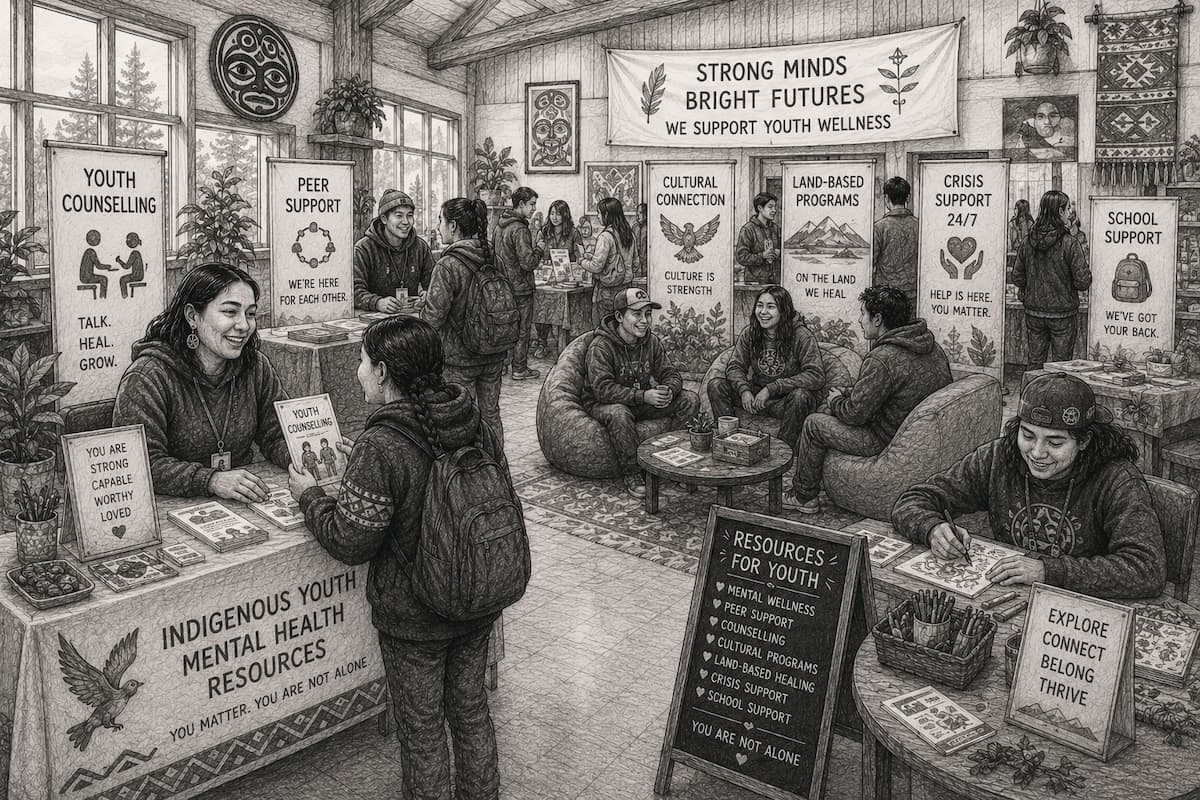
When you're facing a mental health crisis, knowing where to turn can feel overwhelming. The good news? You have real options. From crisis helplines you can call tonight to land-based healing programs rooted in your culture, support exists in many forms.
Jordan's Principle even covers costs that once stood in your way. But how do you actually reach these resources—and what should you expect when you do?
Key Takeaways
- Crisis Helplines: Indigenous youth can call the Native Youth Crisis Hotline (1‑877‑209‑1266) or Hope for Wellness (1‑855‑242‑3310) for 24/7 support.
- Jordan's Principle: Ensures First Nations children access counselling, psychotherapy, and clinical care without payment disputes, having approved over $205 million in mental health requests.
- Land-Based Healing: Programs like hunting, fishing, and seasonal harvesting boost self-esteem and cultural identity through holistic, small-group formats.
- Peer Support Networks: The WHY Network and We Matter campaign, built by and for Indigenous youth, promote hope and suicide prevention.
- Cultural Continuity: Language retention and self-governance strongly predict lower youth suicide rates by strengthening identity, belonging, and self-worth.
Helplines You Can Call or Text Right Now
When you're in crisis, several helplines are ready to connect you with immediate support, whether you'd rather call or text.
The Hope for Wellness Helpline offers 24/7 crisis intervention for all Indigenous people across Canada at 1‑855‑242‑3310, and if typing feels easier, you can use its online chat instead.
The Native Youth Crisis Hotline, at 1‑877‑209‑1266, focuses specifically on Indigenous youth facing suicide risk, mental health crises, or violence.
Indigenous youth facing suicide risk, mental health crises, or violence can find support at the Native Youth Crisis Hotline.
In British Columbia, the KUU‑US Aboriginal Crisis Line operates province‑wide at 1‑800‑588‑8717, with a dedicated child and youth line at 250‑723‑2040.
You can also reach the national 9‑8‑8 Suicide Crisis Helpline by call or text, or dial 1‑800‑784‑2433, which BC resource pages often promote alongside it.
If residential school trauma affects you or your family, the Indian Residential School Survivors and Family Hotline at 1‑866‑925‑4419 provides trauma‑informed support whenever you need it. Beyond these immediate lines, many Indigenous communities also offer traditional healing practices, including ceremonies, healing circles, and connections to Elders and traditional healers.
How Jordan's Principle Pays for Mental Health Care
Helplines can stabilize a moment of crisis, but ongoing mental health care often requires funding that families struggle to secure when governments argue over who should pay.
Jordan's Principle exists to remove that barrier. It's a child-first principle ensuring First Nations children receive necessary services without waiting for federal and provincial governments to settle payment disputes.
If you're seeking mental health support, this funding can cover counselling, psychotherapy, and clinical interventions delivered by qualified professionals. It can also pay for assessments, including psychological, psychiatric, developmental, and behavioural evaluations needed to plan your care. Any request should include documentation from licensed professionals familiar with the child to link it to their health, social, or educational needs.
Eligibility extends to First Nations children across Canada, both on and off reserve, and supports needs tied to complex conditions like Fetal Alcohol Spectrum Disorder.
Since April 2018, more than $205 million in mental health requests have been approved.
To start, you can submit a request through the national call centre or a regional contact.
Land-Based Healing Programs That Strengthen Indigenous Youth
While funding can open access to professionals, healing doesn't always happen in an office, and for many Indigenous youth, the most meaningful support comes from time spent on the land. Land-based programs grounded in Indigenous knowledge have consistently improved self-esteem, cultural identity, and overall well-being across multiple studies. Through activities like hunting, fishing, trapping, paddling, and seasonal harvesting, you'll see youth reconnect with their culture while building coping skills, confidence, and resilience.
What makes these programs effective is their focus on the whole person. Rather than targeting symptoms alone, they center Indigenous knowledge systems, language, ceremony, and Elders, addressing mental, emotional, physical, and spiritual wellness together. Preserving Indigenous languages plays a crucial role in protecting belief systems and strengthening community identity, fostering important cultural and linguistic protective factors.
Small group formats foster peer connection and intergenerational mentorship with knowledge keepers. These programs also serve as protective factors against suicide, strengthening identity, belonging, and community connection.
Even urban youth can benefit through community gardens and land-based cultural days adapted for city life.
Peer Support and Youth-Led Wellness Networks
The land builds connection through culture, but sometimes the most powerful support comes from someone who simply gets it. Peer support networks ground themselves in shared lived experience, relational accountability, and Indigenous values, moving away from hierarchical clinician-client models.
Sometimes the most powerful support comes from someone who simply gets it—rooted in shared experience, not hierarchy.
These spaces center strengths, hope, and life promotion rather than deficit-based narratives, often guided by youth advisory councils and youth-led decision-making. The WHY Network is the first network developed by and for Indigenous youth.
You'll find programs like the We Matter campaign, which uses messages of hope, online resources, and school workshops, and British Columbia's Yúusnewas, focused on suicide prevention and decolonial education.
The Wiisokodaadig Youth Peer Helper Program builds resilience and confidence through community-based helpers, while the WHY Network shares knowledge nationally.
These networks reach you through circles, campus hubs, online platforms, and community workshops.
Backed by significant federal investment, including roughly $10.8 million for the ACCESS Open Minds Indigenous Network, they collaborate with schools and health centers to embed lasting support.
Cultural Continuity as Protection Against Suicide Risk
Peer connections heal one relationship at a time, but the deeper protection against youth suicide operates at the level of entire communities.
When you look at why some First Nations communities in British Columbia record zero youth suicides while others reach rates as high as 633 deaths per 100,000 person-years, the answer lies in cultural continuity—the living connection between past, present, and future through language, land, governance, and tradition.
Communities that control their own education, health services, police, and cultural facilities, and that have completed land claims and self-government agreements, see dramatically lower youth suicide. The strongest protective factor identified is Indigenous self-governance.
Language retention stands out as the strongest predictor: where a majority still speak an Indigenous language, youth suicide nears zero.
You can think of these factors as collective protective shields, strengthening identity, belonging, and self-worth.
That's why many communities now frame language and self-determination programs explicitly as suicide-prevention work, not just cultural preservation.
Getting Past Wait Times, Stigma and Red Tape
Even when a young person finally decides to ask for help, the road to actual support can feel discouragingly long. In Ontario, you might wait an average of 67 days for counselling and 92 days for intensive treatment, while national data show median waits around 24 days for children and youth.
Those delays often trace back to underfunded community services, too few trained staff and limited programs, especially in smaller or remote communities. Among Indigenous youth, the need is especially pressing, as 47% of First Nations off-reserve reported needing mental health care in the past year, with younger individuals showing a higher need than older ones.
But you don't have to accept the standard waitlist as your only option. Indigenous-specific centres like Anishnawbe Health Toronto fold mental health care into primary care and cultural programming, with waits closer to four to eight weeks.
Many agencies run walk-in counselling, brief intervention clinics and group programs that move faster. Indigenous Support Lines connect providers to cultural and system-oriented assistance, and federal crisis supports let you reach help without traversing formal referral processes first.
This article is intended for educational and informational purposes only and should not be considered medical, legal, or financial advice. NIHB policies, provider eligibility, and coverage procedures may change over time and can vary depending on individual circumstances. For the most current information, contact Indigenous Services Canada, Express Scripts Canada, or a qualified healthcare provider familiar with NIHB mental health counselling services. If you are experiencing a mental health crisis or require urgent support, contact emergency services, 9-8-8, or Hope for Wellness immediately.