Indigenous Crisis Resources in Canada

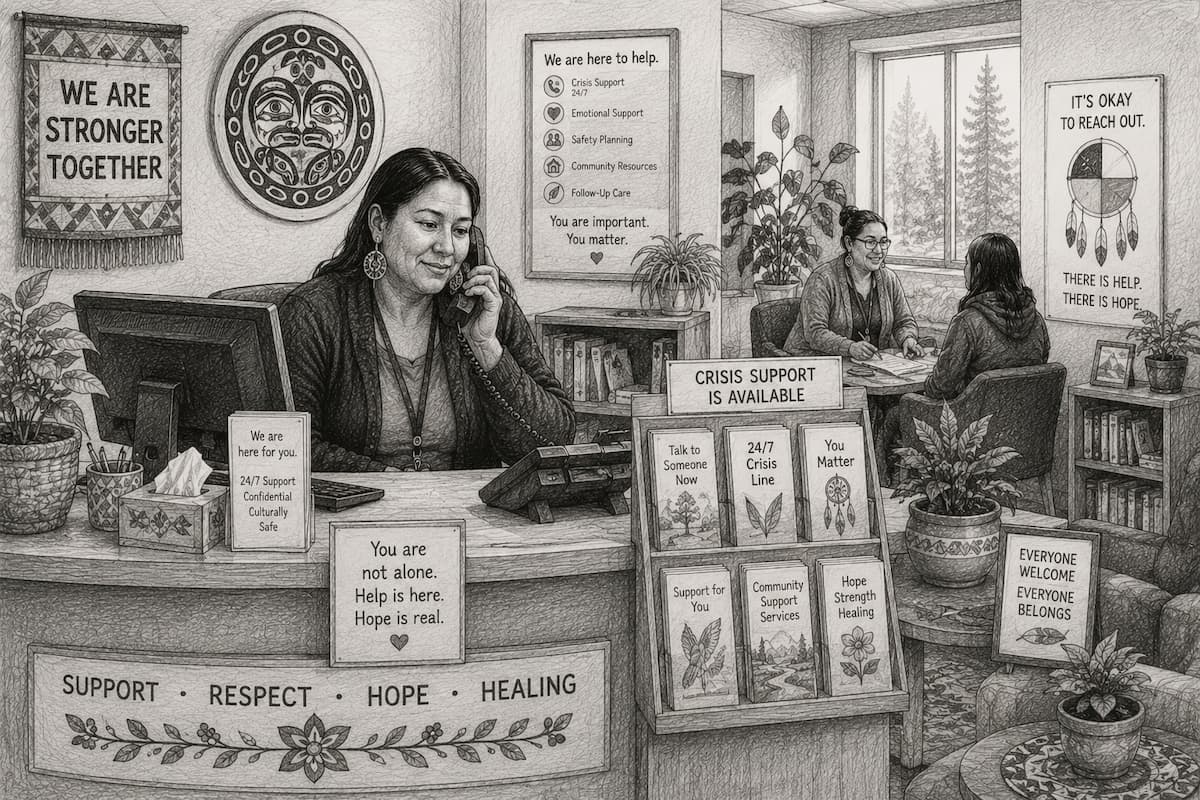
When you're facing a crisis, knowing where to turn matters. Canada offers several Indigenous crisis lines designed to meet your specific needs, whether you're a residential school survivor, supporting a loved one, or maneuvering intergenerational trauma.
These services provide culturally safe, trauma-informed care around the clock. But which line fits your situation, and what should you expect when you reach out? Let's look at your options.
Key Takeaways
- The Hope for Wellness Helpline (1-855-242-3310) offers 24/7 confidential, free counselling in multiple languages, including Cree, Ojibway, and Inuktitut.
- The National Indian Residential School Crisis Line (1-866-925-4419) provides 24/7 support for Survivors and families affected by intergenerational trauma.
- The MMIWG2S+ Crisis Line (1-844-413-6649) supports those affected by missing or murdered Indigenous women, girls, and 2SLGBTQQIA+ people.
- The KUU-US Crisis Line (1-800-588-8717) delivers 24/7 culturally safe support across British Columbia, including dedicated lines for youth.
- Talk4Healing (1-855-554-4325) assists Indigenous women and gender-diverse people facing violence, offering up to 14 Indigenous and regional languages.
National Indigenous Crisis Lines You Can Call Now
When you're in crisis, knowing exactly who to call can make all the difference, which is why Canada offers several national Indigenous crisis lines staffed by people who understand the specific traumas affecting First Nations, Inuit, and Métis communities.
If you're a former residential school student or an affected family member, you can reach the National Indian Residential School Crisis Line at 1-866-925-4419, available 24/7.
For anyone touched by the loss of missing or murdered Indigenous women, girls, and 2SLGBTQQIA+ people, the MMIWG2S+ Crisis Line at 1-844-413-6649 offers trauma-informed support and safety planning.
The KUU-US First Nations and Aboriginal Crisis Line, 1-800-588-8717, provides round-the-clock de-escalation and referrals every day of the year.
Available 24/7, the KUU-US Crisis Line offers de-escalation and referrals every single day at 1-800-588-8717.
And if you're an Indigenous woman or gender-diverse person facing violence, Talk4Healing at 1-855-554-4325 connects you with culturally grounded counselling, shelter information, and legal supports. For First Nations, Métis, and Inuit families seeking culturally safe supportive listening, the Indigenous Support Line can be reached at 1-844-944-4744 Monday to Friday from 10:00 a.m. to 6:00 p.m.
Each line links you to relevant community services.
How the Hope for Wellness Helpline Supports You
Anyone reaching out during a difficult moment deserves immediate, judgment-free support, and the Hope for Wellness Helpline delivers exactly that to First Nations, Inuit, and Métis people anywhere in Canada.
You can connect 24/7 by calling the toll-free number 1-855-242-3310 or by using the secure online chat, whichever matches your comfort and privacy needs. This service is backed by the Government of Canada, which allocates over $350 million annually to support the mental wellness needs of Indigenous communities.
There's no referral or prior diagnosis required, so trained counsellors respond quickly to whatever you're facing—stress, anxiety, depression, grief, family conflict, substance use, or thoughts of self-harm.
These counsellors are culturally competent, creating space to discuss trauma, loss, and healing within Indigenous worldviews while blending traditional understandings of wellness with mainstream approaches.
When scheduled counsellors are available, you can speak in Cree, Ojibway, or Inuktitut, alongside English and French.
Every conversation stays confidential and free of charge, and if you need longer-term care, counsellors can point you toward other health, community, and social services.
Crisis Support for Residential School Survivors
Because the wounds left by the residential school system run deep and often span generations, survivors and their families need support designed specifically for that experience.
You can reach the National Indian Residential School Crisis Line at 1-866-925-4419, which operates 24 hours a day, seven days a week, toll-free across Canada, at no cost to you.
When you call, responders offer immediate emotional support and grounding during acute distress, while clinical staff provide crisis counselling and help assess what you need before arranging further care.
If longer-term help makes sense, crisis workers can refer you to local mental health professionals, community counsellors, and Resolution Health Support Program services. They'll also share information about health supports, compensation processes, and survivor-focused programs whenever you ask. These support services can be offered on an individual, family, or group basis to meet your needs.
This service isn't limited to former students; it extends to affected family members nationwide, recognizing how intergenerational trauma reaches relatives across generations.
Throughout, the care stays culturally informed.
KUU-US and IRSSS Crisis Lines in BC
The KUU-US Crisis Line Society offers another essential lifeline for Indigenous people in British Columbia, operating as a non-profit registered charity that delivers culturally grounded, Indigenous-led crisis services across the province.
You can reach the toll-free provincial line at 1-800-588-8717 any time, since it runs 24 hours a day, seven days a week. If you're in the Port Alberni area, you can call the adult and Elder line at 250-723-4050 or the child and youth line at 250-723-2040 for age-appropriate support.
Beyond simply listening, KUU-US also provides risk assessments to determine the level of help each person needs.
Beyond phone-based help, KUU-US deploys mobile crisis response for life-threatening situations and offers housing assistance and the Ḥaaḥuupa healing circle.
For Residential School Survivors, the IRSSS provides additional support. You can access its 24/7 Lamathut Crisis Support Line at 1-800-721-0066.
These lines serve Survivors, intergenerational Survivors, and affected families, connecting you with counselling, cultural support workers, and community-based healing programs no matter where you live.
Alberta's Indigenous Support and Health Navigation Line
When you're trying to navigate Alberta's health system as an Indigenous person, the Alberta Indigenous Support Line offers a toll-free, confidential way to find culturally safe guidance and support.
By calling 1-844-944-4744 or reaching the service through 811, you connect with Indigenous Listeners—Indigenous health professionals who provide supportive listening, clarify diagnoses, care plans, and referrals, and link you to both Indigenous-specific and mainstream resources. This service is available across Alberta, wherever you are located in the province.
Whether you're First Nations (Status or Non-Status), Métis, or Inuit, living on- or off-reserve, in a Métis Settlement, or in an urban or rural community, you can access this service without a referral.
The line also helps with addiction and mental health concerns, arranges access to Elders and traditional healing, and coordinates translation when you need it.
Operating Monday to Friday, 10:00 a.m. to 6:00 p.m., it's free and anonymous. Family members and service providers can call too, seeking advice on supporting Indigenous patients effectively.
Should You Call or Use Online Chat?
How do you decide whether to pick up the phone or open an online chat window when you need support? Start by considering your circumstances.
If your internet connection is unreliable, a toll-free phone line like Hope for Wellness or KUU-US gives you immediate access without depending on data. Phone calls also let helpers hear your tone and pacing, supporting a more nuanced read of your distress. Because these lines are open 24/7, you can reach out at any hour, including holidays.
When your connection falters, a toll-free call offers instant access—and lets helpers hear the nuance in your voice.
If you'd rather write than speak, you're not alone—research shows 42% of young people prefer writing, and 71% favour non-verbal support.
Online chat lets you communicate silently, which helps when you're worried about being overheard in a shared space, and you can save or screenshot coping strategies and referrals for later.
Language matters too: Hope for Wellness offers Cree, Ojibway, and Inuktitut by phone and chat, though availability varies weekly.
Choose the mode that feels most comfortable and accessible for you.
What Makes These Crisis Lines Culturally Safe?
What Makes These Crisis Lines Culturally Safe?
Because cultural safety isn't a single feature but a foundation, these crisis lines build it into every layer of how they operate—from who answers your call to how they understand the reasons behind it.
When you reach out to services like Hope for Wellness, KUU-US, or Talk4Healing, you connect with counsellors who are culturally competent and knowledgeable about colonial impacts, community realities, and traditional practices.
Many of these lines are run "by and for" Indigenous communities, with Talk4Healing operated by Indigenous women for Indigenous women and their families.
You can often speak in your own language—Talk4Healing offers up to 14 Indigenous and regional languages, while Hope for Wellness provides First Nations, Inuit, and Métis languages on request.
The approach is trauma-informed and holistic, honouring relational communication norms like storytelling and respect for silence, and affirming access to ceremony, Elders, and land-based healing as genuine pathways forward. These services help address barriers in accessing health and social services caused by racism and discrimination.
This article is intended for educational and informational purposes only and should not be considered medical, legal, or financial advice. NIHB policies, provider eligibility, and coverage procedures may change over time and can vary depending on individual circumstances. For the most current information, contact Indigenous Services Canada, Express Scripts Canada, or a qualified healthcare provider familiar with NIHB mental health counselling services. If you are experiencing a mental health crisis or require urgent support, contact emergency services, 9-8-8, or Hope for Wellness immediately.