Mental Health Resources for Inuit Communities
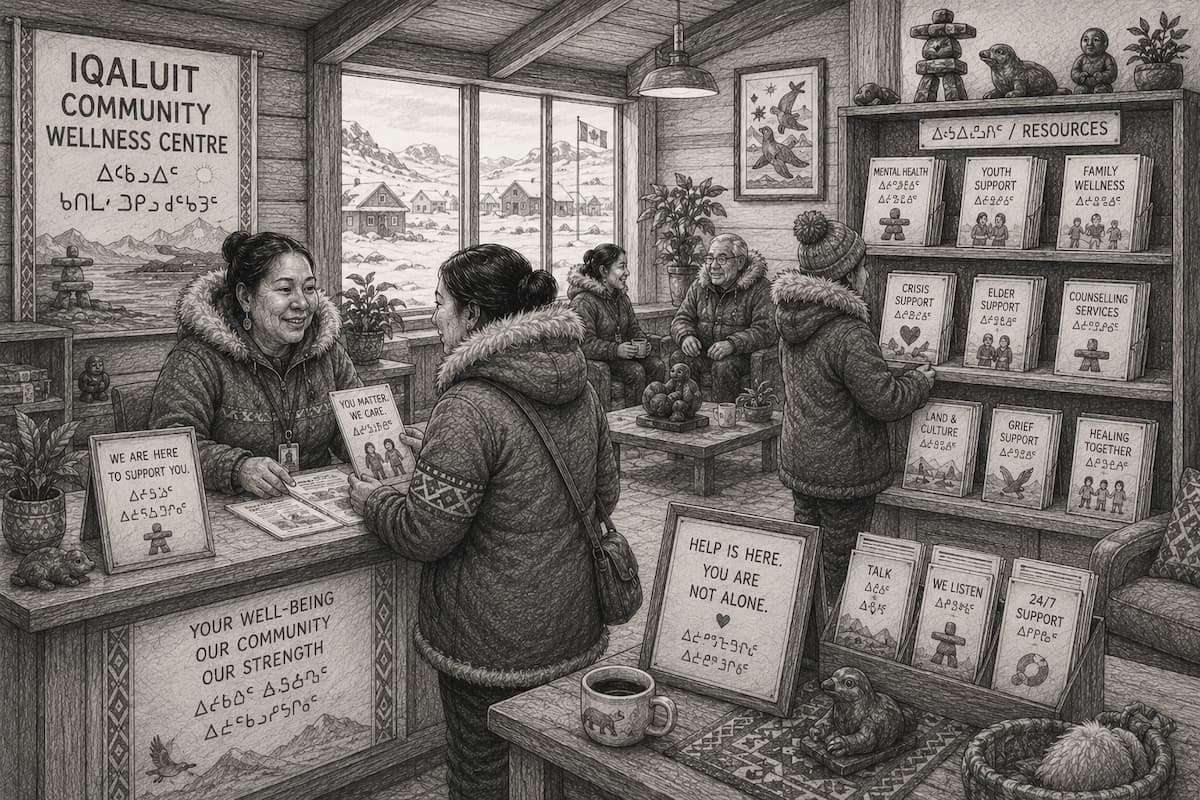
When life feels heavy, where do you turn for help? If you're part of an Inuit community in Canada, you've got more options than you might realize. From 24/7 crisis lines to free counselling through NIHB, support is closer than you think.
Land-based healing and Inuit-led prevention programs also offer paths rooted in culture and tradition. Let's break down what's available—and how you can access it when it matters most.
Key Takeaways
- The First Nations and Inuit Hope for Wellness Help Line (1-855-242-3310) offers culturally competent, multilingual crisis support and online chat.
- NIHB covers approximately 22 fully-funded counselling sessions yearly for registered Inuit, with direct billing and no session fees.
- The National Inuit Suicide Prevention Strategy is an Inuit-led initiative addressing high suicide rates through social equity and cultural continuity.
- Land-based healing programs like Aullak and Angunasuktiit blend traditional knowledge with Western psychiatry to strengthen wellness.
- Inuit Tapiriit Kanatami's Nuluaq Mapping Project helps locate community-based mental health resources across Canada.
Where Inuit Can Get 24/7 Crisis Help
If you're an Inuk facing a mental health crisis, several 24/7 services stand ready to help you, whether you prefer to call, text, or chat online.
The First Nations and Inuit Hope for Wellness Help Line offers free, confidential phone support at 1‑855‑242‑3310, with counsellors who provide culturally competent crisis intervention in English, French, and Indigenous languages such as Inuktitut where possible.
If calling feels difficult or unsafe, you can use the same service's online chat for real‑time, trauma‑informed care.
In Nunavut, you can reach the Kamatsiaqtut Help Line anonymously at 1‑800‑265‑3333, or 979‑3333 in Iqaluit, for emotional support around suicidal thoughts, grief, and loneliness. This support reflects the Government of Canada's broader commitment, which allocates over $350 million annually for the mental wellness needs of Indigenous communities.
Nationally, the 9‑8‑8 Suicide Crisis Helpline answers calls and texts from any Canadian phone, including Inuit Nunangat regions, offering de‑escalation and safety planning.
You can also text HOME to 686868 to connect with trained crisis responders anytime, anywhere in Canada.
How NIHB Covers Inuit Mental Health Counselling
Beyond crisis lines, you may need ongoing support to work through anxiety, depression, trauma, or grief, and the Non-Insured Health Benefits (NIHB) program can help cover that care.
If you're registered under a recognized Inuit or First Nations category and have an NIHB client number, you can access mental health counselling no matter where you live—urban, rural, remote, or northern.
With an NIHB client number and recognized status, mental health counselling is within reach—wherever you call home.
NIHB covers professional counselling delivered by licensed psychologists, social workers, psychotherapists, and other approved professionals. You can receive assessment, diagnosis, and treatment in individual, couple, or family formats, either in person or through virtual sessions. Many therapists also use a holistic approach that blends Western mental health methods with Indigenous teachings.
These services are generally funded at 100%, with no session fees when your provider arranges direct billing.
Typically, you can use about 22 one-hour sessions per year without prior approval. If you need more—say, during an acute crisis or complex trauma—your counsellor can submit a treatment plan or clinical rationale to request additional hours.
Inuit-Led Suicide Prevention Through NISPS
While individual counselling supports your personal healing, suicide prevention in Inuit communities requires a broader, coordinated response—and that's exactly what the National Inuit Suicide Prevention Strategy (NISPS) provides.
Developed by Inuit Tapiriit Kanatami (ITK), NISPS responds to a sobering reality: between 2011 and 2016, Inuit in Inuit Nunangat faced a suicide rate of roughly 72 deaths per 100,000, compared with about 12 across Canada overall.
Rather than treating this as solely a clinical problem, NISPS takes a population-health and rights-based approach, linking prevention to social determinants like housing, education, employment, and food security.
You'll find it built around priorities such as creating social equity, promoting cultural continuity, nurturing healthy children, ensuring access to mental wellness services, and healing unresolved trauma and grief.
Significantly, NISPS is Inuit-led, anchored in collaboration between ITK and regional land-claim organizations, so the people most affected design, lead, and evaluate the solutions themselves. To strengthen this work, the Government of Canada and ITK announced $11 million for the National Inuit Suicide Prevention Strategy.
Land-Based Healing and Youth Programs Near You
NISPS names cultural continuity as a prevention priority, and land-based healing turns that principle into practice—taking wellness out of the clinic and onto the ice, water, and tundra where Inuit knowledge lives.
Across Nunavut, the Northwest Territories, and Yukon, research links these programs to reduced stress, stronger cultural identity, and improved mental wellness, especially for youth facing trauma or substance use challenges. Such initiatives often combine traditional Indigenous knowledge with Western psychiatry through a two-eyed seeing approach that respects both systems.
From the ice to the tundra, land-based healing builds stronger identity, eases stress, and renews mental wellness for Northern youth.
You'll find Inuit-led models worth seeking out: Aullak, Sangilivallianginnatuk in Nain pairs hunting, fishing, and trapping with wellness supports, while Angunasuktiit in Clyde River offers year-round instruction from Inuit hunter-mentors.
Elders and cultural mentors guide activities like camping, berry picking, and navigation, alongside sharing circles and one-on-one counselling that sidesteps clinical stigma.
These programs reconnect you with country foods and intergenerational knowledge, often following seasonal rhythms tied to sea-ice and hunting cycles.
To locate options nearby, explore Inuit Tapiriit Kanatami's Nuluaq Mapping Project and community-based initiatives.
This article is intended for educational and informational purposes only and should not be considered medical, legal, or financial advice. NIHB policies, provider eligibility, and coverage procedures may change over time and can vary depending on individual circumstances. For the most current information, contact Indigenous Services Canada, Express Scripts Canada, or a qualified healthcare provider familiar with NIHB mental health counselling services. If you are experiencing a mental health crisis or require urgent support, contact emergency services, 9-8-8, or Hope for Wellness immediately.