Mental Health Resources for First Nations Communities

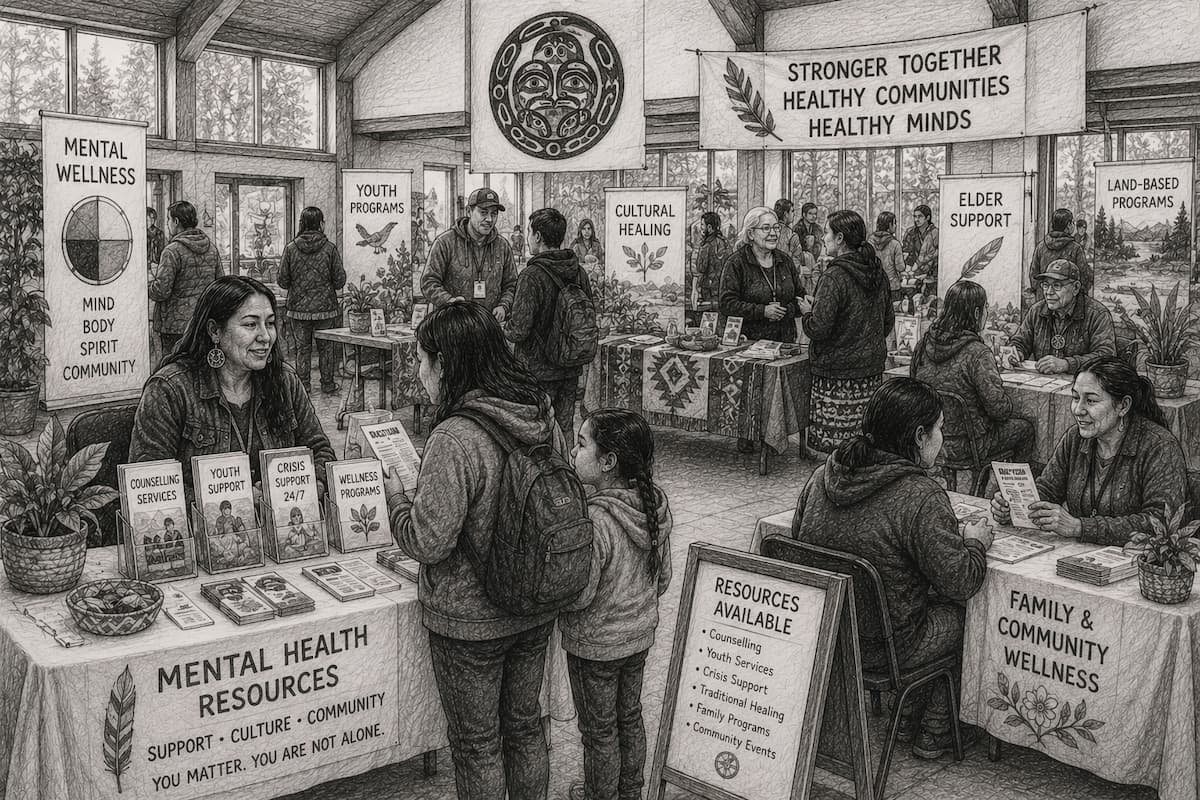
Picture a young woman in a remote northern community who's struggling but lives hours from the nearest counselor. She isn't alone. Across Canada, First Nations communities face mental health challenges shaped by history, geography, and culture.
You'll find that the right resources exist, from 24/7 helplines to land-based healing rooted in tradition. But knowing where to start, and what actually works, makes all the difference.
Key Takeaways
- The Hope for Wellness Helpline offers free 24/7 support at 1-855-242-3310 or hopeforwellness.ca, in English, French, Cree, Ojibway, and Inuktitut.
- The Indian Residential Schools Resolution Health Support Program provides trauma-informed counselling, Elder support, and ceremonies for Survivors and intergenerational relatives.
- Land-Based Healing reconnects individuals with ancestral territories through cultural practices, improving emotional regulation and reducing stress for participants.
- The Mental Wellness Continuum Framework centers culture and language, spanning prevention, treatment, and aftercare to foster hope, belonging, and purpose.
- Federal supports like Non-Insured Health Benefits and Jordan's Principle help fund mental health care and services for First Nations children.
Get 24/7 Help From the Hope for Wellness Helpline
The Hope for Wellness Helpline gives you immediate access to mental health support, no matter where you're in Canada or what time it is. Available 24 hours a day, seven days a week, the service connects all Indigenous people—including First Nations, Inuit, and Métis—with experienced, culturally competent counsellors.
You can call the toll-free number, 1-855-242-3310, from anywhere in the country, or use the secure chat service at hopeforwellness.ca. Both options cost you nothing, and you won't need a referral, appointment, or health card to get help.
Whether you're in crisis, struggling with strong emotional reactions, or feeling triggered by painful memories, counsellors are ready to listen. They'll help you talk through problems, find coping strategies, and connect with community-based services when you're ready for next steps. This service is provided as a health and community service by Ontario Health.
Telephone and chat support are offered in English and French, with Cree, Ojibway, and Inuktitut available by request.
Why First Nations Mental Health Needs Urgent Action
While services like the Hope for Wellness Helpline offer essential support, they respond to a problem far larger than any single program can solve on its own.
The numbers tell a sobering story. First Nations, Métis, and Inuit peoples make up about 4% of Canada's population, yet they carry a far heavier mental health burden than non-Indigenous communities. Nearly 47% of First Nations people living off reserve reported needing mental health care in the past year, and roughly 29% of Indigenous youth experience a psychiatric disorder.
Though just 4% of Canada's population, Indigenous peoples shoulder a mental health burden far heavier than the rest.
The suicide crisis is especially urgent: First Nations people die by suicide at about three times the national rate, and youth at five to six times higher. The Sioux Lookout First Nations Health Authority alone has tracked 624 suicides in its communities since the mid-1980s, with a significant percentage involving youth.
Behind these figures lie intergenerational trauma from residential schools, poverty, overcrowded housing, and limited access to culturally safe care.
You're looking at a public health emergency that demands immediate, sustained, and community-led action—not eventual attention.
What Stops People From Getting Care They Need
Although the will to seek help is often present, a tangle of barriers stands between First Nations community members and the care they need.
If you live in a rural or remote community, you'll likely face long travel distances, high transportation costs, and severe shortages of psychologists, which delay assessment, follow-up, and crisis response.
Even when you reach a clinic, anti-Indigenous racism, stereotyping, and dismissive treatment can make the experience feel unsafe, discouraging you from disclosing what you're going through.
Jurisdictional disputes between federal and provincial governments create coverage gaps, while complex eligibility rules for non-insured health benefits slow access to counselling.
Short-term, project-based funding undermines stable staffing and the long-term relationships that healing requires.
Layered onto these obstacles are stigma around mental illness and substance use, plus deep mistrust rooted in residential schools and child welfare policies. This mistrust is deepened by differing views on wellness, since Indigenous cultures emphasize holistic wellbeing rather than the Western focus on the mind alone.
Together, these forces help explain why so many people remain underserved.
How the Mental Wellness Continuum Framework Works
Confronting those barriers takes more than patching individual gaps, and that's exactly what the First Nations Mental Wellness Continuum Framework (FNMWCF) sets out to do.
The framework places culture at its foundation, weaving First Nations languages, traditions, ceremonies, and knowledge systems through every level of care. It organizes supports along a continuum that spans health promotion, prevention, early identification, early intervention, treatment, recovery, and aftercare, so you can find help at whatever stage you're in.
These services reach youth, children, adults, and Elders, whether you're in your community or away from home. You'll see community-based programs, primary health care, specialized addictions services, crisis response, and ongoing follow-up working together rather than in isolation.
The framework supports the integration of federal, provincial, and territorial programs to ensure these services connect seamlessly across every continuum of care.
Mental Wellness Teams deliver this coordinated, community-driven care directly. Throughout, the framework aims at four outcomes—hope, belonging, meaning, and purpose—the markers that signal you're not just surviving, but genuinely well within strong families and Nations.
Land-Based Healing and Culturally Grounded Programs
When the framework names culture as its foundation, land-based healing is where that principle takes its most tangible form. You'll find programs that reconnect people with ancestral territories through harvesting, trapping, ceremonies, storytelling, and the use of Indigenous languages.
These approaches treat land as a living relative and a source of law, identity, and spirituality, not merely a setting for clinical services. Elders, knowledge keepers, and land users guide the design, embedding teachings about respect, reciprocity, and responsibility into the work.
Such programs respond directly to colonization, forced relocation, and environmental dispossession, which continue to shape mental health inequities. When you take part, you might join sweat lodges, talking circles, fasting, or traditional crafts alongside counseling.
Participants consistently report improved emotional regulation, reduced stress, and renewed hope. By strengthening identity, belonging, and purpose, connection to land becomes a protective factor against depression, anxiety, and psychological distress, supporting holistic wellness.
Federal Programs Funding First Nations Wellness
Four federal programs anchor much of the funding that supports mental wellness in First Nations communities, and understanding how each one works can help you access the right support at the right time.
The Non-Insured Health Benefits program covers professional counselling—assessment, individual and group therapy, and crisis intervention—often fully, sometimes including travel, though prior approval rules apply. Eligible clients can receive up to 22 hours of counselling per calendar year.
Jordan's Principle focuses on First Nations children on and off reserve, accepting individual and group requests for counselling, psychological assessments, and traditional healing, with navigator support guiding families through the process.
Jordan's Principle supports First Nations children everywhere, funding counselling, assessments, and traditional healing with caring navigators guiding families.
The Indian Residential Schools Resolution Health Support Program offers trauma-informed counselling, cultural support from Elders, and ceremonies for Survivors, relatives, and intergenerational Survivors, while covering travel and interpreter services.
Finally, the Emergency and COVID-19 Indigenous Mental Wellness funding, announced in 2020, expanded crisis response and on-call counselling.
Knowing each program's scope helps you match your needs to the right resource.
This article is intended for educational and informational purposes only and should not be considered medical, legal, or financial advice. NIHB policies, provider eligibility, and coverage procedures may change over time and can vary depending on individual circumstances. For the most current information, contact Indigenous Services Canada, Express Scripts Canada, or a qualified healthcare provider familiar with NIHB mental health counselling services. If you are experiencing a mental health crisis or require urgent support, contact emergency services, 9-8-8, or Hope for Wellness immediately.