Doxepin Tapering Guide for Safe Gradual Withdrawal

Tapering off Doxepin isn’t just a simple cut-and-dry process; it’s more like walking a tightrope. You might feel a mix of anxiety and relief, knowing you're easing away from something that once felt necessary.
Each step matters, and a tailored plan can help you navigate this shift. But what happens when those withdrawal symptoms hit? Let’s explore what to expect when you take this leap.
Key Takeaways
- Consult your healthcare provider to create a personalized tapering plan based on your usage and individual needs.
- Consider gradually reducing the dose by 25% for short-term users and 5% for long-term users to minimize withdrawal symptoms.
- Monitor your symptoms regularly and adjust the tapering schedule if necessary, especially in response to withdrawal effects.
- Aim for a minimum tapering duration of four weeks; longer periods (up to six months) are recommended for those on Doxepin long-term.
- Seek immediate help for severe symptoms like chest pain or self-harm thoughts, and maintain regular check-ins with your healthcare provider.
This article is intended for educational and informational purposes only.
Hyperbolic Tapering Calculator for Doxepin
Here is a free calculator you can use to generate a printable hyperbolic tapering schedule for Doxepin.
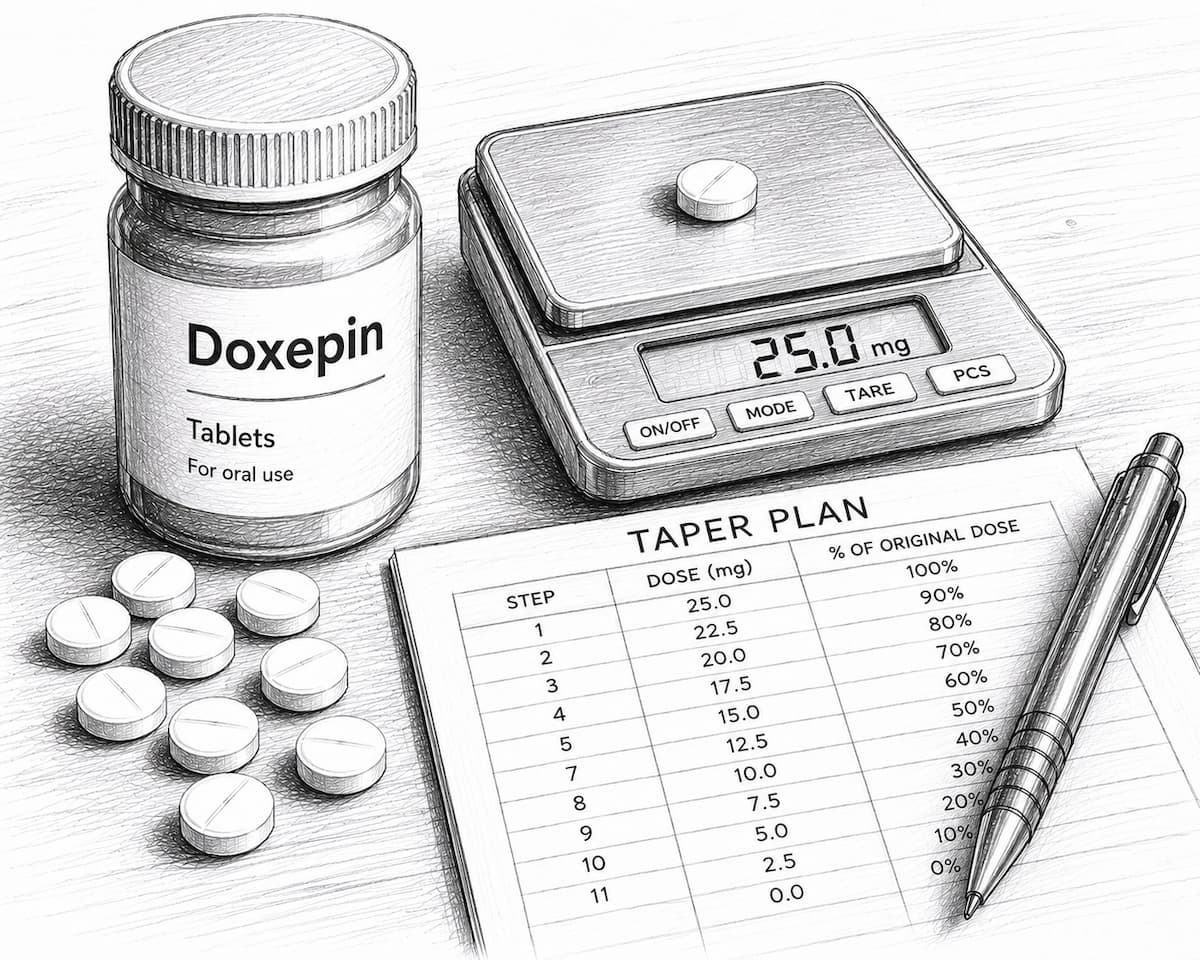
Hyperbolic tapering is a gradual method of reducing psychiatric medications that involves making progressively smaller dose reductions as the overall dose decreases. Rather than lowering the medication by a fixed amount each time, reductions are typically calculated as a percentage of the current dose.
This approach is designed to better reflect how many psychiatric medications interact with brain receptors and may help reduce withdrawal symptoms for some individuals.
One commonly used approach is to reduce the dose by approximately 10% every four weeks. However, tapering schedules should always be individualized based on the person's circumstances, withdrawal symptoms, and response to each reduction.
Hyperbolic Tapering Calculator
This calculator uses a percentage-based (hyperbolic) taper. It is for educational purposes only and does not replace medical advice.
Doxepin Tapering: Uses and Withdrawal Risks
Doxepin, like a double-edged sword, can offer relief from the clutches of depression, anxiety, and insomnia, but its withdrawal isn’t just a bump in the road—it can feel like a steep uphill climb.
You might find that the very symptoms you sought to escape—insomnia and drowsiness—can reappear, almost mocking you, as you start tapering off. It’s vital to recognize that these withdrawal symptoms can hit within just five days, even if you’re trying to ease off gradually.
The process isn't one-size-fits-all; everyone’s experience varies, so individualized monitoring is essential.
Abruptly stopping is a no-go unless there’s an urgent medical issue, like severe cardiac problems.
As you navigate this path, remember that your journey with Doxepin might require patience and vigilance, as the stakes are high and your well-being depends on it. The typical starting dose for depression, anxiety, or insomnia is 75 mg/day, which can guide your tapering process.
How to Taper Doxepin: A Step-by-Step Guide
When you decide to taper off Doxepin, it can feel like starting a challenging journey, one that requires careful planning and a solid strategy.
First, chat with your healthcare provider and pharmacist to agree on a tapering plan tailored just for you. Depending on how long you’ve been using Doxepin, your tapering strategy will differ—short-term users might start with a 25% dose reduction, while those on it for years may only reduce by 5%.
Keep your ears open to your body; monitor how you feel every couple of weeks. If withdrawal symptoms pop up, don’t hesitate to pause or even go back a step. Withdrawal symptoms can significantly affect daily life, so being attentive to your body's signals is essential.
As you near the end, cuts become smaller, like chiseling away at a block of stone, ensuring you’re comfortable at each stage before finally saying goodbye.
What to Expect: Withdrawal Symptoms and Management
As you commence on this tapering journey, it’s important to brace yourself for what lies ahead: withdrawal symptoms that can feel like a storm brewing inside.
You might experience mood swings—irritability, anxiety, and even panic—as your central nervous system readjusts. Sleep disturbances could turn your nights into a restless battleground filled with vivid dreams or nightmares. It’s essential to remember that these symptoms occur because your body is adjusting to the absence of doxepin's effects.
Physically, you may feel flu-like symptoms: headaches, nausea, and muscle aches that leave you drained. Neurologically, you might notice electric shock sensations or heightened sensitivity to light and sound, making it hard to concentrate.
This acute phase usually kicks in within a couple of days and peaks around the end of the first week.
Effective Strategies for a Successful Doxepin Taper
Tapering off doxepin isn’t just a physical adjustment; it’s an emotional journey that can feel like traversing a maze without a map. To find your way, you’ll need a structured tapering schedule, ideally reducing your dose by 25% every four to six weeks. Think of it as taking small steps rather than jumping off a cliff.
Start by cutting back your morning dose first, allowing your body to adapt before tackling the nighttime dose. Aim for a minimum four-week taper, but if you’ve been on doxepin long-term, consider extending it to six months or more.
Everyone’s journey is unique, so customize your plan based on how you feel. Regular check-ins with your healthcare provider can help you navigate this process, ensuring you stay on track. Remember, emotional support matters—reach out to friends or counselors to help you through the maze. Incorporating evidence-based guidelines during your taper can provide additional support and reassurance.
Looking for a more in-depth resource? The Harm Reduction Guide to Coming Off Psychiatric Drugs by Will Hall offers a harm-reduction perspective on psychiatric medications, withdrawal, and making informed decisions about coming off medications.
The guide is available free through Fireweed Collective and has been translated into multiple languages.
When to Seek Professional Help During Withdrawal
Maneuvering the emotional storm of doxepin withdrawal can feel overwhelming, and knowing when to reach out for professional help is essential. If you experience chest pain or severe dizziness, don’t hesitate; those red flags could signal serious issues.
Should you find yourself wrestling with thoughts of self-harm or extreme confusion, it’s vital to seek help immediately. Withdrawal symptoms that linger beyond a week, or worsen instead of improving, are also signs that you need support.
If anxiety or depression resurfaces with a vengeance, or if mood swings feel like a rollercoaster you can’t control, it's time to connect with a mental health professional.
Additionally, remember that gradual tapering is crucial to manage withdrawal symptoms effectively, so don't hesitate to seek guidance if you feel overwhelmed.
This article is intended for educational purposes only and should not be considered medical advice. Psychiatric medication tapering should be discussed with a qualified healthcare professional familiar with your medical history and current circumstances. Withdrawal experiences vary significantly between individuals. Information on this website is not intended to diagnose, treat, or replace individualized medical or psychiatric care. If you are experiencing severe symptoms, worsening mental health, or thoughts of self-harm, seek immediate medical attention or contact emergency services.