
Duloxetine Tapering Guide For Safe Withdrawal

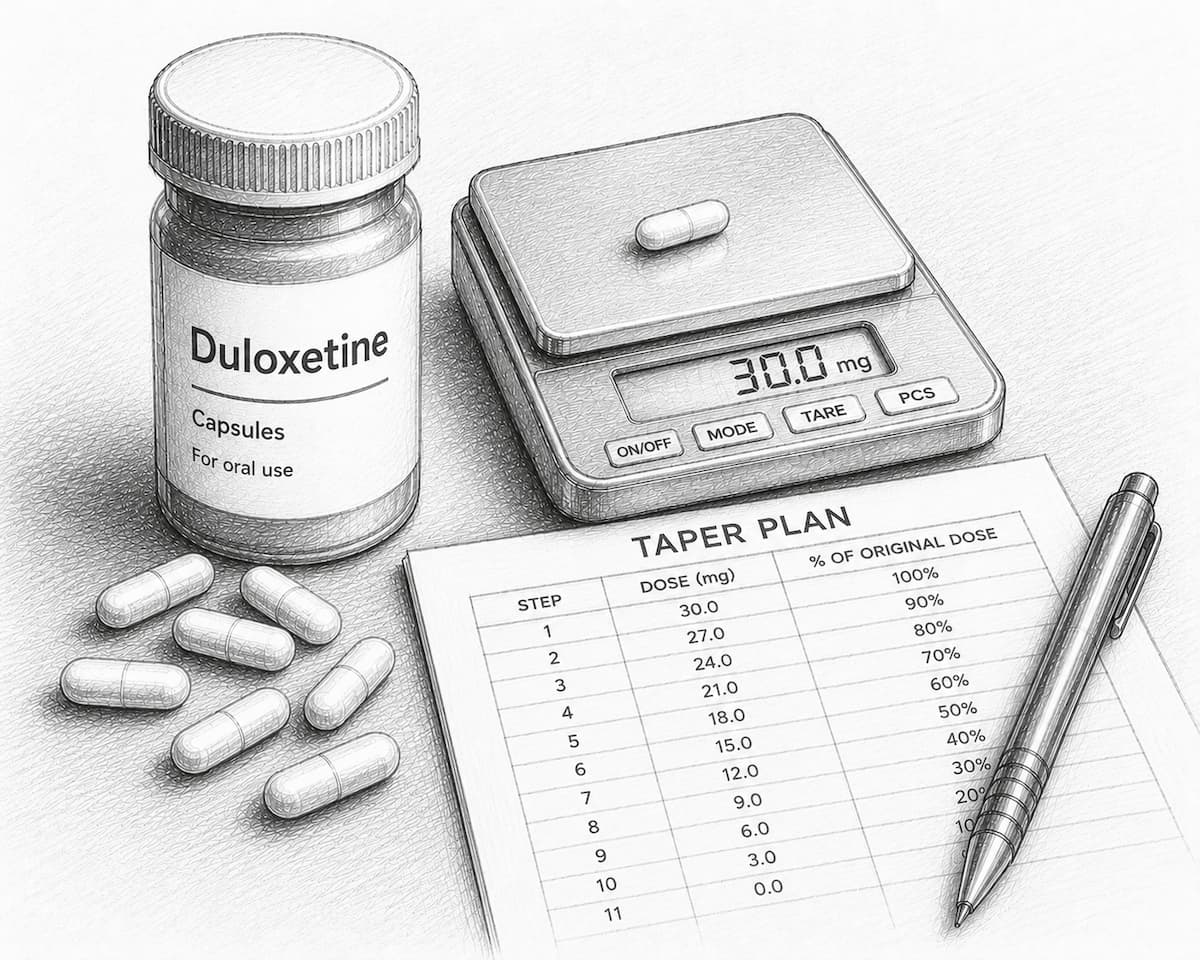
Tapering off Duloxetine isn’t just a simple decision; it’s like steering through a tricky maze where each turn could lead to unexpected pitfalls. You might think stopping cold turkey is the way to go, but the reality is often a storm of dizziness and mood swings that can leave you feeling lost.
It’s essential to understand that a gradual reduction, ideally under medical guidance, can make all the difference. So, what does a successful taper look like?
Key Takeaways
- Gradual tapering over at least four weeks is essential to minimize withdrawal symptoms and allow for receptor recalibration.
- Reduce dosage by about 10% at a time, with monitoring for symptoms under medical supervision.
- Employ methods like the bead count for precise reductions and consider compounded options for smoother transitions.
- Establish a support network and engage in lifestyle changes like regular sleep, nutrition, and stress-reduction practices.
- Distinguish between withdrawal symptoms, which appear quickly, and relapse symptoms, which develop gradually over time.
This article is intended for educational and informational purposes only.
Understanding the Importance of Gradual Tapering for Duloxetine Withdrawal
When you decide to stop taking duloxetine, it’s easy to feel overwhelmed by the idea of withdrawal, but understanding the importance of tapering can make a world of difference.
Think of your brain as a finely tuned orchestra; suddenly removing a few instruments creates chaos. Gradual tapering allows your serotonin and norepinephrine receptors to recalibrate, minimizing that shock to your system. Gradual tapering is essential because it significantly reduces the risk of experiencing severe withdrawal symptoms.
It’s not just about mental comfort; your body needs time to adapt, easing you into the change rather than tossing you into the deep end. A slow, thoughtful reduction can greatly lessen those physical and emotional symptoms, like dizziness or irritability, that can feel like a storm brewing.
Following a proper timeline, ideally over several weeks or months, guarantees you’re not just surviving but genuinely moving toward recovery.
Hyperbolic Tapering Calculator for Duloxetine
Use the free calculator below to generate a personalized, printable hyperbolic tapering schedule for Duloxetine.
Hyperbolic tapering is a gradual strategy for reducing psychiatric medications that involves making progressively smaller percentage-based reductions as the dose decreases. Rather than lowering the medication by a fixed number of milligrams each time, each reduction becomes smaller to better match the body's adjustment to lower doses.
Some people find this method easier to tolerate because it allows the nervous system more time to adapt between dose reductions, potentially reducing the intensity of withdrawal symptoms.
A commonly suggested starting point is to reduce the current dose by approximately 10% every four weeks. However, tapering should always be individualized. The ideal pace depends on factors such as the length of time you've been taking the medication, your current dose, previous withdrawal experiences, and how your body responds throughout the taper.
Hyperbolic Tapering Calculator
This calculator uses a percentage-based (hyperbolic) taper. It is for educational purposes only and does not replace medical advice.
What Are the Risks of Abruptly Discontinuing Duloxetine?
Abruptly stopping duloxetine can feel like jumping off a cliff without a parachute; the sudden descent can leave you reeling with a host of unpleasant symptoms that hit hard and fast. Nearly half of those who quit cold turkey experience harsh withdrawal effects, with dizziness and nausea leading the charge.
Imagine waking up to debilitating headaches and those bizarre brain zaps that feel like electric shocks, making it hard to concentrate.
The emotional rollercoaster can be even scarier, with some facing intense mood swings or resurfacing depression that feels like a dark cloud settling in again.
Discontinuation symptoms can often mimic the very issues the medication was meant to alleviate, compounding the struggle.
You might think it’s just a rough patch, but for many, these symptoms can persist for weeks, even months. It’s a risky gamble, as the potential for severe anxiety and suicidal thoughts lurks just beneath the surface.
Don’t underestimate the impact; your well-being deserves a more careful approach.
FDA Guidance on Safe Duloxetine Discontinuation
Steering through the choppy waters of duloxetine discontinuation can feel like guiding a ship through a storm, and the FDA offers guidance to help manage the journey safely. They recommend a gradual tapering process over at least two weeks, emphasizing that you shouldn’t just stop cold turkey.
This isn’t just about your comfort; it’s about minimizing risks. Abrupt discontinuation can lead to unpleasant symptoms like dizziness and nausea, with nearly half of those who quit suddenly experiencing adverse effects. For those on higher doses, the stakes are even higher. As the body has adapted to Cymbalta’s effects, sudden changes can significantly worsen these symptoms.
Minimizing risks is crucial; sudden discontinuation can trigger dizziness and nausea, affecting nearly half of those who quit abruptly.
If you hit a rough patch during your taper, consider reaching out to your healthcare provider; they might suggest going back to your previous dose before continuing. Remember, the FDA doesn’t specify a safe minimum treatment duration for stopping, so take it slow.
Monitoring and communication are key as you navigate these uncharted waters.
How Duloxetine's Short Half-Life Affects Withdrawal Symptoms
Duloxetine’s short half-life can feel like a rollercoaster ride you never signed up for, especially when you stop taking it. The drug’s average half-life of just 12 hours means that, within a day, your body’s already losing half of what it had.
This rapid decline can trigger withdrawal symptoms as soon as 12 hours after your last dose, often hitting you like a freight train within 1-4 days. You may experience dizziness, nausea, and headaches, with these sensations peaking during the first week.
It’s not just uncomfortable; it feels like your brain’s gone haywire, struggling to balance neurotransmitters that duloxetine once regulated. If you’ve been on it for a while, don’t be surprised if some symptoms linger even after the drug’s out of your system. The medication balances brain chemicals, and without it, you may feel your mood swing unpredictably.
This intense and swift withdrawal process is a stark reminder of how powerful this medication can be, turning your world upside down when you try to step away.
Why Individualized Tapering Matters
When you decide to taper off duloxetine, it’s essential to recognize that a one-size-fits-all approach simply won’t cut it. Each person's journey is unique, and understanding your body's specific needs can make all the difference.
Studies show that nearly half of those who stop antidepressants experience withdrawal symptoms, especially with duloxetine. It’s like stepping off a moving train—it’s jarring if you don’t prepare.
An individualized tapering plan helps you distinguish between withdrawal effects and potential relapse, preventing unnecessary medication restarts. Imagine mistaking brain zaps and nausea for a return of depression; that’s a misstep you want to avoid.
Moreover, your sensitivity to dosage changes can vary, so adjusting your tapering rate is vital. Gradual reductions allow your brain to rebalance its chemistry, easing the shift. This process is particularly important because duloxetine affects the CNS in complex ways, and recognizing these dynamics can facilitate a smoother transition.
Think of it as easing into a cold pool rather than jumping in headfirst; gradual is always better for your mental health.
Recommended Tapering Practices Under Medical Supervision
Tapering off duloxetine under medical supervision can feel like maneuvering through a maze—each turn brings new challenges and insights about your body’s response.
It’s essential to approach this process gradually, as sudden stops can lead to significant health risks. Your healthcare provider will tailor a tapering schedule, often reducing your dose by about 10% at a time, but they’ll adjust this based on how you’re feeling.
Gradual dose reduction is crucial to minimize withdrawal symptoms and ensure a smoother transition.
You might even use techniques like the bead count method to make precise reductions. Remember, monitoring is important; you’ll want to watch for signs of discontinuation syndrome or a return of original symptoms.
Taking it slow—waiting 1-4 weeks between reductions—can help you avoid the emotional rollercoaster that rapid tapering might induce. Trusting your prescriber and staying in touch during this journey is crucial for managing your well-being and making this maze a bit less intimidating.
Choosing the Right Duloxetine Formulation for Tapering
As you navigate the complex landscape of tapering off duloxetine, selecting the right formulation can feel like picking the perfect path through a dense forest. You’ve got standard capsules in various strengths, but those below 20 mg just aren’t available, making precise reductions tricky.
The extended-release options might seem appealing, but they’re designed to resist stomach acid, complicating your taper.
Consider the bead counting method: each capsule holds tiny beads you can count for customized doses. Just remember, you can’t crush the capsules; they’re coated for a reason. If you need more precision, compounding pharmacies can weigh those beads for you, ensuring you’re not left guessing.
You might even ask your doctor for a liquid formulation, allowing for finer adjustments. Utilizing liquid formulations from compounding pharmacies can further enhance your tapering experience by providing tailored dosages.
Each choice shapes your journey, so take the time to find what feels right, keeping your well-being at the forefront.
Establishing Your Initial Tapering Dose
Establishing your initial tapering dose can feel a bit like trying to find your way through a maze, especially when you’re not sure which direction to take. The journey starts with your current maintenance dose, which serves as your baseline.
Whether you're on 20mg for stress urinary incontinence or up to 120mg for depression, knowing this number is essential. Your prescriber will guide you, ensuring you’ve stabilized before beginning the taper.
Knowing your current dose, whether for stress urinary incontinence or depression, is crucial for a safe tapering process.
Typically, a 10% reduction is standard, meaning if you’re on 60mg, your first cut would be 6mg. It’s like carving a path through the fog—you want to make sure each step is calculated and safe.
Remember, your individual condition matters, so a dose for anxiety differs from one for chronic pain. The timeline between reductions is flexible, allowing you to pause if withdrawal symptoms emerge. It’s also important to consider that duloxetine has a lower risk of hypertension than venlafaxine, which may influence your tapering decisions.
Keep close communication with your healthcare provider; their insight is invaluable.
The Importance of Small Dose Reductions in Tapering
When you think about the journey of tapering off duloxetine, it’s easy to underestimate the power of small dose reductions; after all, it might seem like a mere fraction of what you’ve been taking.
But here’s the thing: these tiny adjustments are like gentle nudges for your nervous system, allowing it time to catch up with the changes in brain chemistry. Imagine trying to balance on a seesaw; a sudden drop on one side sends you flying, while a gradual shift keeps you steady.
Small reductions help mitigate those pesky withdrawal symptoms—dizziness, irritability, nausea—making your exit smoother. Plus, they let you listen to your body, adjusting the pace as needed. Research indicates that lower starting doses and gradual titration may enhance patient adherence to duloxetine, emphasizing the importance of a careful approach during withdrawal.
Skipping these final tiny steps could feel like a leap into the unknown. So, take it slow; after all, the goal is a safe progression, not just a quick fix.
Example Tapering Schedules for Duloxetine
Tapering off duloxetine isn’t just a straightforward process; it’s more like maneuvering a winding road with plenty of twists and turns.
You might find a structured 40-step schedule particularly helpful, gradually reducing your dose from 60mg to tiny micro-doses of 0.65mg. Each step takes 2-4 weeks, allowing your body to stabilize.
Don’t skip any steps, especially near the end—those minimal reductions can trigger withdrawal symptoms. Moreover, proper guidance during tapering is crucial to mitigate potential withdrawal effects.
Alternatively, if you’re looking for a quicker route, a rapid tapering schedule could be on your radar, but it's only suitable for those on 60mg daily. It shifts you to every third day in just ten days. If you’re on higher doses, start with daily reductions before switching to an alternate-day schedule.
Remember, flexibility is key; you can adjust based on how you’re feeling, and always consult your doctor for guidance.
Understanding Hyperbolic Tapering and Its Benefits
While many people imagine tapering off medication as a simple countdown or steady climb down a hill, the reality can feel more like traversing a labyrinth filled with unexpected turns and emotional bumps.
Hyperbolic tapering, introduced by Dr. Mark Horowitz in 2019, embraces this complexity. Instead of steadily cutting doses, you start with larger reductions that taper off gradually, easing your body into new, lower set points.
This method recognizes that smaller, more frequent reductions can prevent those gut-wrenching withdrawal symptoms, especially at lower dosages where standard pills aren't available. Research shows this approach works; 71% of participants successfully discontinued their antidepressants without the dreaded side effects. Gradual tapering approaches can significantly minimize withdrawal effects, leading to a smoother transition.
Hyperbolic tapering offers a nuanced approach, starting with larger dose reductions that gradually ease your body into lower levels.
Imagine steering your journey with a guide, adjusting your pace based on how you feel. With hyperbolic tapering, you're not just counting down; you’re tuning in to your body’s needs, making the process feel more manageable and less intimidating.
Hyperbolic Tapering Calculator
This calculator uses a percentage-based (hyperbolic) taper. It is for educational purposes only and does not replace medical advice.
Compounded Medications: Essential Tools for Tapering
Maneuvering the journey of tapering off duloxetine can feel like trying to find your way through a dense fog, where every step forward might bring unexpected challenges. Compounded medications are your guiding light in this murky path.
Standard capsules just don’t cut it; they can lead to wild fluctuations in your system, making it hard to find that sweet spot. By opting for compounded liquids or custom capsules, you get precise measurements that allow for smoother, more manageable reductions.
Think of it like carving a sculpture—each small adjustment counts. Those tiny dose changes help you avoid severe withdrawal symptoms, letting you navigate your taper with grace. Additionally, these compounded options can help mitigate withdrawal symptoms that might occur during the tapering process, ensuring a gentler transition.
Plus, specialized pharmacies can even create microbeads for ultra-fine reductions, ensuring you don’t accidentally overdo it. So, lean on these tools; they’re essential for carving out a safer, more personalized tapering experience.
Common Withdrawal Symptoms to Watch For
As you start reducing your duloxetine dosage, you might feel like you’re stepping into a storm, with withdrawal symptoms swirling around you. You may experience brain zaps, those unsettling electric shocks that hit within 24 to 48 hours after your last dose.
Dizziness might come calling, along with flu-like symptoms—body aches, chills, and that nagging malaise that makes you feel off. Nausea could join the party, making you question your appetite and even causing stomach cramps. Withdrawal symptoms typically last 1–3 weeks, so it's important to be prepared for this duration.
On the psychological front, anxiety and irritability might creep in, turning familiar situations into emotional minefields.
Sleep? Forget about it. You could find yourself tossing and turning, haunted by vivid dreams or relentless insomnia.
Tapering Timeline After Dose Changes
Steering through the tapering timeline after reducing your duloxetine dosage can feel like wandering through a foggy maze, where every turn brings uncertainty and a mix of emotions.
You might notice initial withdrawal symptoms creeping in within 12 hours, often peaking around 24 to 48 hours after your last dose. It’s essential to remember that your body’s reaction is unique; for some, symptoms may not surface for weeks.
Initial withdrawal symptoms can appear within 12 hours, peaking between 24 to 48 hours, but everyone’s experience is different.
Most experts recommend tapering over at least four weeks, but it can stretch into several months if you’ve been on higher doses for longer. It’s crucial to be aware that alternate-day dosing could increase the risk of withdrawal symptoms during this process.
You’ll want to reduce your dose every 2-4 weeks, allowing your brain time to adjust. If you hit rough patches, don’t hesitate to pause or adjust your tapering speed.
Those final small reductions are vital—skipping them might send you tumbling back into discomfort. Take it slow; your well-being’s worth the wait.
Distinguishing Withdrawal Symptoms From Relapse
Understanding the difference between withdrawal symptoms and a relapse can feel like trying to solve a puzzle with missing pieces. Withdrawal often hits you like a sudden wave, crashing within 24 to 72 hours after cutting back on your duloxetine. You might experience those infamous "brain zaps" or feel dizzy, as if the ground beneath you is shifting.
In contrast, a relapse creeps in more gradually, often weeks later, leaving you questioning your progress as the shadows of old feelings return.
While physical symptoms like nausea and chills scream withdrawal, mood swings and irritability can blur the lines. The key is in the timing and the pattern—withdrawal symptoms tend to peak and then fade, while a relapse sticks around, stubborn and unyielding. Recognizing that specific antidepressants like duloxetine can lead to significant withdrawal symptoms helps in identifying your experience.
If you find relief by reinstating your medication, you’re likely dealing with withdrawal, not a relapse. This clarity might just be your lifeline on this rocky journey.
Exploring Prozac Crossover as an Alternative Tapering Method
Exploring alternative methods for tapering off duloxetine can feel like traversing a labyrinth, especially when you're grappling with the weight of withdrawal symptoms. You might've heard about cross-tapering with fluoxetine, or Prozac, as a potential lifeline.
Though research primarily focuses on shifting from duloxetine to fluoxetine, there’s curiosity about using Prozac as a bridge during duloxetine withdrawal. The idea is that fluoxetine’s longer half-life could smoothen the rough edges of withdrawal, offering your nervous system a gentler exit.
But here’s the catch: we lack solid evidence on whether this approach effectively mitigates withdrawal symptoms. You might find yourself wondering if this method could ease your journey, yet the specifics of such a shift remain murky. Cross Taper strategies are often recommended for transitions between different drug classes, emphasizing the need for careful management.
Acknowledging these uncertainties is essential, as maneuvering through this process without clear guidance can feel overwhelming and, at times, isolating.
How Medical Oversight Helps You During Tapering
Finding your way along the winding path of duloxetine tapering can feel like trying to find your way through a foggy forest; you know there’s a way out, but each step feels uncertain and fraught with potential pitfalls.
That’s where medical oversight becomes your guiding light. Physicians craft personalized tapering plans, tailoring the process to your specific needs and history. They help you reduce doses gradually, often by 5-10% every 1-2 weeks, to minimize discomfort. With careful monitoring, they’re ready to adjust your tapering schedule based on how your body reacts, ensuring you don’t face unexpected withdrawal symptoms alone.
This flexible approach not only makes the experience more manageable but also prevents serious complications, especially considering that gradual tapering can help reduce the intensity of withdrawal symptoms.
Treatment Options for Managing Withdrawal Symptoms
As you navigate the choppy waters of duloxetine withdrawal, knowing there are effective treatment options can feel like a lifeline thrown your way.
Gradual tapering is key; slowly reducing your dosage over weeks helps your body adjust, minimizing those pesky withdrawal symptoms. Think of it as a gentle wave, allowing you to adapt rather than a sudden storm. Duloxetine withdrawal can lead to neurotransmitter imbalance, making this gradual approach even more crucial.
Staying hydrated flushes out toxins, easing headaches and discomfort. Consistent sleep and light activities can stabilize your mood, almost like a soothing balm for your nervous system.
Consider a pharmacological bridge; shifting to a longer-acting antidepressant, like fluoxetine, might ease your journey.
And don’t underestimate the power of professional support—cognitive-behavioral therapy can help you navigate the emotional maze of withdrawal.
It’s a tough road, but with the right strategies and support, you can weather this storm and emerge stronger on the other side.
Building Support for Duloxetine Tapering Success
Building a solid support network during your duloxetine taper isn’t just helpful—it’s essential. Think of it as having a safety net while you walk a tightrope; one misstep can feel monumental.
First, enlist a healthcare professional who understands the nuances of tapering. Their expertise is like having a guiding star, helping you navigate personalized schedules that minimize side effects, especially the risk of brain zaps.
Enlist a knowledgeable healthcare professional; their guidance is essential for navigating your tapering journey effectively.
Pair this with a therapist who can help you untangle emotional knots, providing tools to cope with stress and identify triggers.
Don’t underestimate the power of peer support, either. Joining a group can transform isolation into connection, where shared stories offer warmth and hope.
Lifestyle changes—like prioritizing sleep and incorporating physical activity—can help stabilize your body during this process.
Finally, consider virtual care; it can keep you connected with specialists who understand your journey, ensuring you're never truly alone as you take these vital steps.

Looking for a more in-depth resource? The Harm Reduction Guide to Coming Off Psychiatric Drugs by Will Hall offers a harm-reduction perspective on psychiatric medications, withdrawal, and making informed decisions about coming off medications.
The guide is available free through Fireweed Collective and has been translated into multiple languages.
Final Thoughts on Navigating Duloxetine Withdrawal Safely
Maneuvering duloxetine withdrawal can feel like traversing a foggy landscape—everything seems hazy, and the path ahead is anything but clear. You’re not alone; it’s essential to remember that each person’s journey is unique.
Some may face mild symptoms, while others could wrestle with prolonged discomfort. The absence of FDA guidelines means your tapering plan needs to be tailored just for you. Keep in mind that gradual tapering is associated with fewer and milder symptoms, which can significantly improve your experience.
Keep an eye out for symptoms that could masquerade as a relapse; distinguishing between withdrawal and returning mental health issues can be tough. Gradual reductions—starting at 10%—often pave the way for a smoother experience, but you might need to adjust based on how your body reacts.
With patience, medical support, and a solid plan, you can navigate this fog. It’s about finding your way through, step by step, until the landscape clears and you reclaim your path to wellness.
This article is intended for educational purposes only and should not be considered medical advice. Psychiatric medication tapering should be discussed with a qualified healthcare professional familiar with your medical history and current circumstances. Withdrawal experiences can vary significantly between individuals. Information on this website is not intended to diagnose, treat, or replace individualized medical or psychiatric care. If you are experiencing severe symptoms, worsening mental health, or thoughts of self-harm, seek immediate medical attention or contact emergency services.