
Citalopram Tapering Guide for Safe Withdrawal

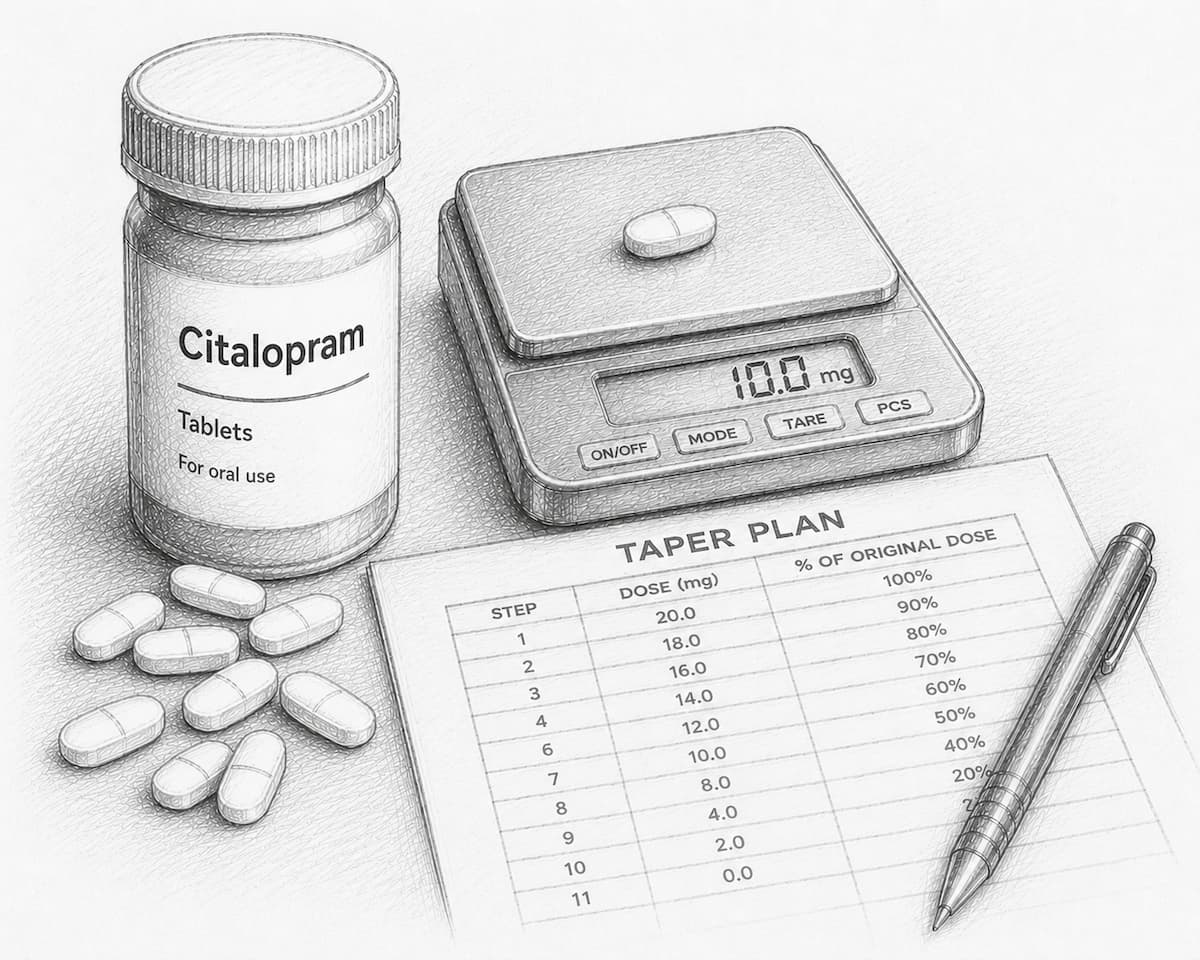
It's funny how life throws coincidences at us, like when you suddenly realize you can't remember the last time you felt truly like yourself. If you're facing the thought of tapering off citalopram, you're not alone, and it's a journey filled with its own challenges.
It’s essential to navigate this process carefully, as the road can be bumpy. So, what should you expect and how can you manage it? Let’s explore that together.
Key Takeaways
- Consult a healthcare provider before starting the tapering process to create a personalized plan.
- Gradually reduce the dose by 25% every 1-2 weeks to minimize withdrawal symptoms.
- Monitor for withdrawal symptoms like dizziness, nausea, and emotional swings during the tapering.
- Engage in self-care strategies, including exercise, nutrition, and stress reduction techniques, to support mental health.
- Maintain regular check-ins with your healthcare provider to adjust the tapering schedule as needed.
This article is intended for educational and informational purposes only.
Understanding Citalopram and Its Tapering Uses
Citalopram, often compared to a lighthouse guiding ships through a stormy sea, stands as a beacon of hope for those steering through the choppy waters of depression and anxiety.
Citalopram shines like a lighthouse, offering guidance and hope to those navigating the turbulent seas of depression and anxiety.
As a selective serotonin reuptake inhibitor (SSRI), it works by boosting serotonin levels, helping you find that elusive mental balance. Since its FDA approval in 1998, it’s been a go-to for adults battling major depressive disorder. If you’re one of those seeking relief, you might start at 20 mg daily, adjusting as necessary.
While primarily for depression, Citalopram’s also found a place in treating anxiety disorders and obsessive-compulsive tendencies. However, it’s crucial to discuss the risks of taking citalopram with your healthcare provider before starting any tapering process.
But remember, understanding its uses and effects is vital before considering any tapering journey—especially when it comes to your well-being.
Why Tapering Off Citalopram Is Crucial
When you're ready to step away from a medication like Citalopram, it might feel like preparing to jump off a diving board into uncertain waters. You might think you can just leap, but the reality is that tapering off is essential for your mental health.
Abruptly stopping Citalopram can trigger Antidepressant Discontinuation Syndrome, leaving you with flu-like symptoms, anxiety, or insomnia—like a storm brewing inside you.
The risk of these withdrawal symptoms increases with dosage and how quickly you stop taking the drug, making gradual tapering essential to minimize potential discomfort.
Hyperbolic Tapering Calculator for Citalopram
Below you'll find a free calculator that can help you create a personalized, printable hyperbolic tapering schedule for Citalopram.
Hyperbolic tapering is a method of gradually reducing psychiatric medications by making smaller percentage-based reductions as the dose becomes lower. Instead of reducing by the same number of milligrams at each step, the amount reduced gradually decreases over time.
For some people, this slower approach may better support the nervous system's adjustment to each dose reduction and help minimize withdrawal symptoms.
One commonly discussed strategy is to reduce the current dose by approximately 10% every four weeks. However, tapering is not one-size-fits-all. The most appropriate schedule should always be tailored to the individual, taking into account their medication history, withdrawal symptoms, and overall response throughout the taper.
Hyperbolic Tapering Calculator
This calculator uses a percentage-based (hyperbolic) taper. It is for educational purposes only and does not replace medical advice.
How to Identify Withdrawal Symptoms
What does it feel like to suddenly find yourself engulfed in a whirlwind of emotions and physical sensations after stepping down from a medication like Citalopram?
You might experience dizziness, as if the ground's shifting beneath you, or nausea that twists your stomach like a rollercoaster gone awry.
Headaches could pulse through your mind, while flu-like symptoms leave you achy and fatigued. Emotionally, you may feel like a pendulum, swinging wildly between irritability and sadness, even facing anxiety that creeps in like a shadow. It's important to remember that over 50% of individuals experience withdrawal symptoms after stopping, which can add to the emotional turmoil.
Your thoughts might blur, making simple tasks feel monumental. Watch for signs like "brain zaps," tingling sensations, or crying spells. Recognizing these symptoms can help you navigate this tumultuous journey toward recovery.
What Tapering Protocols Work Best for Citalopram?
As you commence on the often intimidating journey of tapering off Citalopram, understanding the various protocols available can feel like trying to navigate a maze without a map. Individualized tapering is essential; consider your unique risk factors and adjust your plan based on how you respond.
A common approach (this doesn't mean the "best" approach) is reducing your dose by 10% every 1-2 weeks. For instance, if you’re on 20mg, drop to 15mg for two weeks, then taper down by 5mg. Monitoring your symptoms biweekly can help catch any issues early. It is important to remember that many individuals experience withdrawal symptoms after long-term use, so a gradual tapering approach is advisable.
Consider Hyperbolic Tapering for Citalopram
Hyperbolic tapering is a gradual, structured approach to coming off psychiatric medications. Instead of reducing by a fixed amount, the dose is lowered by a consistent percentage, meaning the reductions become smaller as the overall dose decreases.
This approach is intended to minimize withdrawal effects by better matching how the medication interacts with brain receptors, which follows a nonlinear (hyperbolic) pattern.
A commonly used guideline is to reduce the dose by approximately 10% every four weeks.
Here is a free calculator you can use to generate a printable hyperbolic tapering schedule.
Hyperbolic Tapering Calculator
This calculator uses a percentage-based (hyperbolic) taper. It is for educational purposes only and does not replace medical advice.
How to Manage Withdrawal Symptoms Effectively
Steering through withdrawal symptoms can feel like you’re caught in a storm without an umbrella, and you might find that managing these challenges requires a blend of preparation and resilience.
First, stay in close contact with your doctor; regular check-ups can make a world of difference. You might lean on pain relievers for those pesky muscle aches or grab some sleep medications if insomnia keeps you up at night. It’s essential to remember that citalopram has a longer half-life, which may help lessen the severity of withdrawal symptoms.
Embrace exercise and a nutrient-dense diet—it’s like giving your body a hug from the inside out. Don't underestimate stress reduction techniques; yoga or meditation can be lifesavers.
Adjusting Your Tapering Schedule Based on Symptoms
When you’re in the thick of tapering off citalopram, it can feel a bit like trying to navigate a maze without a map, especially as your body reacts to the changes. You’ll want to stay vigilant, monitoring your symptoms closely.
If withdrawal symptoms hit hard within days of a dose reduction, it’s time to reassess your tapering schedule. Physical signs like dizziness or headaches might mean you’re cutting back too fast, while neurological sensations like brain zaps scream for an immediate pause.
Psychological symptoms, such as anxiety or irritability, signal that you should slow your progress. Withdrawal symptoms typically emerge within days of dose reduction and can be mistaken for a relapse, so it’s crucial to differentiate between the two.
When to Get Professional Help?
Steering through the tapering process can feel like walking a tightrope, where one misstep can send you tumbling into a world of discomfort and confusion. If you start experiencing severe withdrawal symptoms, like intense dizziness or heart palpitations, don’t hesitate to reach out for professional help.
Those feelings can signal that your tapering plan needs adjustment. If you’ve ever faced suicidal thoughts or crises, it’s vital to seek immediate support; don’t attempt to manage this alone.
If you’ve got a history of heart issues or psychiatric conditions, a provider’s expertise is essential. Long-term use of Celexa is linked to persistent sexual dysfunction, which may indicate the need for professional guidance during your tapering journey.

Looking for a more in-depth resource? The Harm Reduction Guide to Coming Off Psychiatric Drugs by Will Hall offers a harm-reduction perspective on psychiatric medications, withdrawal, and making informed decisions about coming off medications.
The guide is available free through Fireweed Collective and has been translated into multiple languages.
Supporting Your Mental Health While Tapering
As you commence the journey of tapering off citalopram, it’s essential to recognize that your mental health may feel like a rollercoaster ride—full of unexpected twists and turns that can leave you breathless.
During this time, support becomes vital. Here are some strategies to help you maintain stability:
- Stay Active: Regular exercise helps balance those serotonin levels and fights off irritability.
- Practice Mindfulness: Techniques like meditation can ease anxiety and ground you during mood swings.
- Keep a Journal: Track your symptoms to distinguish between withdrawal effects and potential relapses. Remember that awareness of withdrawal symptoms can significantly aid in your understanding of what you’re experiencing.
- Connect with Others: Lean on therapy or support groups to share experiences and validate your feelings.
This article is intended for educational purposes only and should not be considered medical advice. Psychiatric medication tapering should be discussed with a qualified healthcare professional familiar with your medical history and current circumstances. Withdrawal experiences vary significantly between individuals. Information on this website is not intended to diagnose, treat, or replace individualized medical or psychiatric care. If you are experiencing severe symptoms, worsening mental health, or thoughts of self-harm, seek immediate medical attention or contact emergency services.