
Daily Symptom Chart For Antidepressant Tapering

Like Theseus tracing his thread through the labyrinth, you need a reliable way to find your path when tapering off antidepressants. A daily symptom chart gives you that thread. It turns vague feelings into clear data, helping you tell withdrawal from relapse.
You'll spot patterns your memory would miss, and you'll give your prescriber something concrete to work with. But knowing what to track—and when to act—makes all the difference.
Key Takeaways
- Track essential symptoms daily, including physical signs, sleep patterns, neurological symptoms like "brain zaps," mood changes, and cognitive shifts.
- Record antidepressant name, dose, taper step, sleep details, and substance intake like caffeine, nicotine, and alcohol.
- Rate symptom severity on a 0–10 scale to guide tapering: mild (1–3) allows steady reduction, moderate (4–6) suggests slowing.
- Use the DESS Checklist's 43 symptoms to measure withdrawal severity, with higher totals signaling heavier withdrawal load.
- Daily charts distinguish withdrawal from relapse, detect red-flag symptoms early, and provide evidence-based data for prescriber communication.
This article is intended for educational and informational purposes only.
Why a Daily Symptom Chart Helps During Tapering
When you're tapering off an antidepressant, a daily symptom chart turns guesswork into structured, objective information that makes the entire process safer and more manageable. Instead of relying on memory or vague impressions, you record what you feel each day, building a clear record that aligns with measurement-based care—the practice of tracking symptoms consistently to detect problems and improve outcomes.
This structured approach helps in several ways. It lets you and your clinician differentiate withdrawal from relapse, since discontinuation symptoms like dizziness, nausea, or irritability often appear within days of a dose change, while depression tends to return gradually. A consistent chart also supports gradual reductions that allow the brain and body to adapt effectively throughout the taper.
It supports early detection of taper-related problems, flagging red-flag signs before they escalate. And it guides individualized dose adjustments, so your taper speed matches your actual response rather than a generic timeline.
Ultimately, charting gives you real, evidence-based data that informs smarter decisions and reduces unnecessary medication changes.
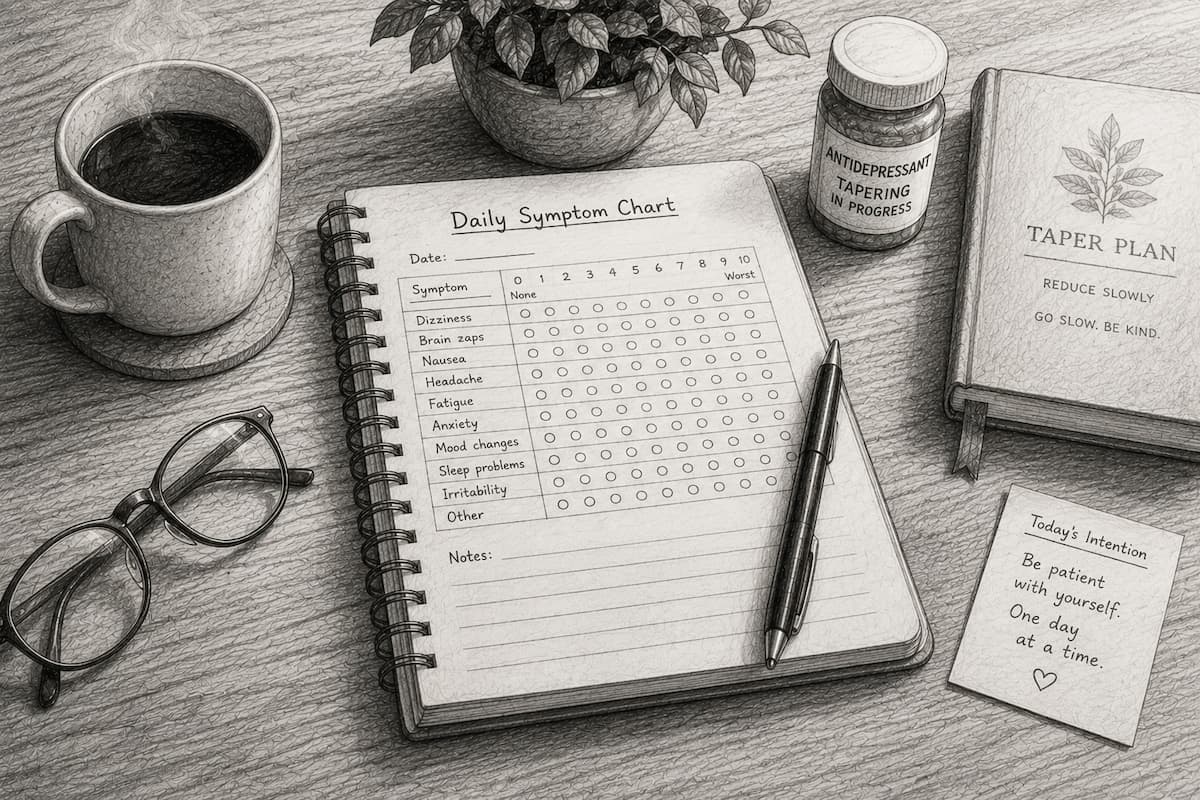
Here is an example of a simple daily symptom tapering chart you can test out:
Who's Most Likely to Get Discontinuation Symptoms?
Charting your symptoms becomes even more valuable when you understand whether you're someone who's likely to experience discontinuation symptoms in the first place. Several factors raise your risk.
If you're taking a short half-life antidepressant like venlafaxine, paroxetine, escitalopram, or fluvoxamine, you're more likely to notice withdrawal effects than someone on fluoxetine, which tapers itself thanks to its long half-life. Among these, paroxetine is notably linked to severe symptoms because of its especially short half-life.
Your personal characteristics matter too. Research consistently shows that women, younger adults, and people who've taken antidepressants for longer durations or at higher daily doses face greater risk.
If you experienced side effects early in your treatment, that early sensitivity can predict tougher discontinuation later. Comorbid anxiety or a heightened awareness of bodily sensations can also amplify how intense and distressing your symptoms feel.
Knowing where you fall among these risk factors helps you anticipate what's ahead, so your daily chart captures the right details from the start.
Withdrawal vs Relapse: How to Tell the Difference
One of the most common worries during tapering is figuring out whether the symptoms you're feeling mean your depression or anxiety is coming back, or whether they're simply your body adjusting to less medication.
Timing offers your first clue: withdrawal usually appears within days to two weeks of a dose change, while relapse tends to emerge weeks to months later, without a clear link to any specific reduction.
Watch the clock: withdrawal strikes within days to two weeks of a dose change, while relapse builds gradually over weeks to months.
The quality of symptoms matters too. If you're noticing dizziness, "brain zaps," paresthesias, or flu-like aches alongside mood swings, that's more typical of withdrawal.
Relapse, by contrast, recreates your original profile—persistent low mood, loss of interest, and negative thinking—without new physical complaints.
Pay attention to the course as well. Withdrawal often waxes and wanes, with good and bad days, then resolves in one to two weeks. A prompt response to reinstatement of your antidepressant also points toward withdrawal rather than relapse.
Steadily worsening scores over weeks point toward relapse instead.
Symptoms Your Chart Should Track
Because withdrawal can touch nearly every system in your body, a useful symptom chart needs to cast a wide net rather than focus on mood alone.
Start with physical and flu-like signs: track fatigue, headaches, muscle aches, sweating, chills, and gastrointestinal upset like nausea or diarrhea. These flu-like symptoms commonly arise after abruptly stopping antidepressants taken for at least six weeks.
Add a sleep section to record how long you sleep, how often you wake, and whether vivid dreams or daytime drowsiness appear.
Neurological symptoms deserve their own space, since dizziness, "brain zaps," tremor, and balance problems often signal discontinuation.
Don't overlook mood and anxiety, where you'll note irritability, low mood, tearfulness, panic surges, and shifts in motivation.
Finally, monitor cognitive and autonomic changes, including concentration "fog," memory lapses, appetite swings, palpitations, flushing, and temperature spells.
Wrap up each day by rating your overall functioning at work, in relationships, and in self-care.
Together, these clusters give you a complete, honest picture.
What to Include in Each Daily Entry
Everyone benefits from a daily entry that captures more than just symptoms, because the context surrounding those symptoms often explains them.
Start by recording your antidepressant name, formulation, and total daily dose, along with the taper step you're on, such as "Step 2 of 6" or a percent reduction. Note your exact dosing times, any splits across morning, midday, and evening, and whether you missed, delayed, or took an extra dose.
Then track the timing of notable changes, including when they began, how long they lasted, and whether they're intermittent or steadily improving. This kind of detailed tracking is especially valuable because discontinuation syndrome affects about half of those reducing or stopping their medication.
Add your sleep details—bedtime, wake time, total duration, and quality—plus appetite, weight, gastrointestinal discomfort, or flu-like sensations.
Don't forget your caffeine, nicotine, and alcohol intake, since these can compound jitteriness.
Finally, log significant stressors, coping strategies you used, social support you accessed, and any clinical contact. Together, these details turn scattered notes into meaningful patterns.
How to Rate Symptom Severity Day by Day
Consistency is the engine that turns daily ratings into useful insight, so the way you score your symptoms matters as much as what you write. Use a simple 0–4 Likert scale, where 0 means no symptom, 1 mild, 2 moderate, 3 severe, and 4 extreme. Rate each symptom for the previous 24 hours, and keep the same scale across every symptom and every day so you can compare trends at a glance.
Don't rely on a single number alone; refine it by noting frequency (once, several times, most of the day, constant) and duration (minutes versus hours). Fold in functional impact, too, because intensity and impairment together define each level—mild stays noticeable without changing what you can do, while severe brings marked distress and impaired functioning.
Pay close attention to emotional numbing, cognitive impairment, and sleep disturbances, since these are common adverse effects of antidepressants that your chart can help distinguish from withdrawal.
Flag any day when a symptom plus impairment reaches at least moderate, since guidelines tie clinical action to that functional change.
Score Symptoms With the DESS Checklist
When you need a structured way to capture withdrawal effects, the Discontinuation-Emergent Signs and Symptoms checklist—known as DESS—gives you a research-tested framework built specifically for antidepressant tapering.
The checklist covers 43 individual symptoms spanning emotional, neurologic, gastrointestinal, sleep, and general somatic domains, so you won't overlook subtle changes. You can track nervousness, irritability, sudden mood worsening, anger attacks, headaches, tiredness, feeling faint, chest pain, palpitations, stomach pain, dizziness, and muscle or joint pain on a single tool.
To score it, you note whether each symptom is new or worsened compared to your baseline, then total the endorsed items. Many current protocols ask you to rate each symptom's intensity, producing graded severity scores rather than simple presence-or-absence counts.
If you log your scores in an online portal, you may be able to skip multi-factor authentication for 5 days when logging in from the same device and browser.
Higher totals signal a heavier withdrawal load. If you want extra clarity, you can separate psychological items from physical ones, generating sub-scores that distinguish emotional withdrawal from somatic discomfort.
Red-Flag Symptoms That Need Urgent Attention
While the DESS checklist captures the everyday ebb and flow of withdrawal, some symptoms fall outside the scope of routine tracking and demand immediate action rather than a tally mark.
If you notice new or rapidly worsening suicidal thoughts, planning, or a preoccupation with death after lowering or stopping your dose, seek help right away—especially when paired with intense agitation, insomnia, and impulsivity. Research shows that antidepressant discontinuation is linked to an increased risk of suicide attempts, underscoring why these warning signs deserve urgent attention.
New or worsening suicidal thoughts after a dose change—paired with agitation, insomnia, or impulsivity—demand immediate help, not patience.
Watch for signs of serotonin syndrome, such as tremor, clonus, high fever, profuse sweating, confusion, or a racing heart, which can escalate within hours.
Severe neurologic warning signs matter too: a first-time seizure, sudden disorientation, hallucinations, fainting, or marked unsteadiness and falls. Cardiovascular red flags include a resting heart rate consistently above 120 bpm, irregular heartbeat, chest pain, or shortness of breath.
These aren't symptoms you log and revisit tomorrow; they warrant urgent medical evaluation, so call your clinician or emergency services immediately.
Set Thresholds for Adjusting Your Taper
Three kinds of thresholds—symptom severity, functional impairment, and time course—turn your daily chart from a passive record into a decision-making tool.
Start with severity: rate withdrawal symptoms on a 0–10 scale each day. Mild ratings of 1–3 usually mean you can hold steady, while 4–6 or clustering of dizziness, nausea, and nervousness signals you should consider slowing down. Ratings of 7 or higher, or marked distress, demand a more cautious response.
Next, watch your functioning. If new insomnia lasts more than three nights, or your work and self-care slip for several days, your last cut was likely too large. Holding at the current dose lets things stabilize.
Finally, factor in timing. Withdrawal tends to appear within days and ease quickly once you reinstate; relapse builds gradually over weeks. Recognizing this distinction matters because mistaking withdrawal for relapse is a common error rooted in the hyperbolic nature of how drug dose relates to effect.
When moderate symptoms don't clearly improve within three to seven days, reduce your taper pace with smaller cuts or longer intervals.
A Sample Daily Symptom Chart You Can Copy
Now that you understand how thresholds turn observations into decisions, you need a structure that captures those observations consistently from one day to the next.
Start each entry with the date, day of week, and taper day number, then record your current antidepressant, formulation, and exact dose, along with your previous and planned next dose.
Add morning, afternoon, and evening columns rated 0–10 for physical, sensory, emotional, and cognitive symptoms, including a dedicated safety-flag row for suicidal thoughts or severe distress.
Track functioning too: sleep timing and quality, appetite, work or household tasks, social engagement, and any caffeine, alcohol, or substance use that might influence your symptoms.
Use a traffic-light system to mark mild, moderate, and severe days, plus a daily global wellness score to visualize your trajectory. Rating symptom intensity on a scale from 1-10 makes your tracking more effective and easier to communicate to your healthcare provider.
Keep crisis lines handy, note coping strategies you've used, and add a weekly summary row to spot emerging patterns.
When to Check In With Your Prescriber
Because your daily chart captures patterns you might otherwise dismiss in the moment, it becomes one of your most valuable tools for deciding when a phone call to your prescriber is warranted.
Reach out promptly if you notice new or rapidly worsening flu-like symptoms, insomnia, nausea, imbalance, brain zaps, dizziness, or a racing heart after a dose change.
Seek urgent contact or emergency services for suicidal thoughts, extreme behavior changes, or psychosis.
Beyond crises, schedule a pre-taper consultation, a review within the first week after each significant reduction, and another check around four to six weeks after stopping completely. Sharing your chart is especially helpful because most prescribers now work in primary care settings that have absorbed the rising demand for mental health management.
Always communicate before resuming a previous dose or starting a new medication.
When you're unsure whether you're facing withdrawal or relapse, your chart helps clarify the difference: physical symptoms appearing within days suggest discontinuation, while a gradual return of low mood or anxiety points toward recurrence that deserves careful, professional attention.
Looking for a more in-depth resource? The Harm Reduction Guide to Coming Off Psychiatric Drugs by Will Hall offers a harm-reduction perspective on psychiatric medications, withdrawal, and making informed decisions about coming off medications.
The guide is available free through Fireweed Collective and has been translated into multiple languages.
Apps and Tools to Log Symptoms Digitally
If your paper-and-pen chart feels like too much to keep up with—or if you simply prefer typing on your phone—digital tools can shoulder some of that daily logging for you.
Taper-specific apps like TaperMate, Taper®, and Taper AI combine dose reduction calculators, evidence-based guidance, and withdrawal symptom tracking in one place, so your reductions and symptoms stay linked over time. TaperMate also works as a complementary tool that simplifies the tapering journey and encourages patient self-management.
Taper-specific apps link your dose reductions and withdrawal symptoms in one place, so patterns stay connected over time.
If you struggle to remember doses during a complex schedule, general reminder apps like MyTherapy, Medisafe, Dosecast, or EveryDose offer customizable dosing alerts and intake documentation.
You can even pair a taper-specific app with a reminder app to get both dose precision and consistent alerts.
For mood patterns specifically, apps such as MoodTools let you log emotions, triggers, and symptoms, then visualize them over time.
Emerging sensor-based monitoring may add passive data, helping you and your prescriber catch changes early.
Choose whatever tool you'll actually use consistently.
Frequently Asked Questions
Can I Drink Alcohol While Tapering off My Antidepressant?
You'd best avoid alcohol while tapering off your antidepressant. It's a CNS depressant that worsens drowsiness, dizziness, and mood instability, masks withdrawal signs, and reduces treatment effectiveness. If you do drink, keep it minimal and tell your doctor.
Will Switching to a Longer Half-Life Antidepressant Ease Withdrawal?
Yes, switching often helps—studies show shorter half-life drugs cause withdrawal in up to 66% of people. You'll find longer-acting agents like fluoxetine release gradually, creating a "built-in taper" that smooths your symptoms considerably.
Are Discontinuation Symptoms Dangerous or Permanent if Left Untreated?
You'll usually find symptoms aren't dangerous or permanent—most resolve within weeks. But if you stop suddenly, severe symptoms can impair functioning or raise self-harm risk, and a small minority experience protracted, months-long effects. Taper slowly.
Can Supplements or Diet Changes Reduce Withdrawal Symptoms?
Diet and dietary supplements deliver supportive, not standalone, relief. You'll find balanced meals, B12, folate, magnesium, vitamin D, and probiotics may steady your mood, but they won't prevent withdrawal alone—gradual tapering with clinician guidance remains essential.
Should I Restart My Full Dose if Symptoms Worsen?
You shouldn't automatically restart your full dose. Instead, talk with your doctor about reinstating a small fraction and tapering slower. Track your symptoms first, since worsening could signal withdrawal rather than true relapse needing full reinstatement.
This article is intended for educational purposes only and should not be considered medical advice. Psychiatric medication tapering should be discussed with a qualified healthcare professional familiar with your medical history and current circumstances. Withdrawal experiences vary significantly between individuals. Information on this website is not intended to diagnose, treat, or replace individualized medical or psychiatric care. If you are experiencing severe symptoms, worsening mental health, or thoughts of self-harm, seek immediate medical attention or contact emergency services.